Comments Off on SGA Keynote speaker Prof. Jochen Kolb in Prague
On May 5, 2026, the SGA Student Chapter Prague had the honour of welcoming Prof. Dr. Jochen Kolb for a lecture titled Lithium Resources in Geothermal Brines of the Upper Rhine Graben and Possible Extraction Technologies, held as a seminar for the entire geological section of the Faculty of Science, Charles University in Prague. In total, 31 participants attended the seminar.
On April 9, members of our Chapter, the SGA Baltic Student Chapter, and the SEG Student Chapter Freiberg began the Hungarian field trip at the Gánt bauxite deposit. Here, we were introduced to the regional geology of Hungary as well as the local geology of the deposit. Apart from the aluminium ore, we collected some high-quality UV-active gypsum crystals. The day continued at the Nagybörzsöny ore district, a highly evolved hydrothermal system with unusual bismuth–tellurium mineralisation, and concluded with panning almandine garnets from stream sediments.
The XXV International Conference of Young Geologists (ICYG 2026) was held on 14–17 May 2026 in the Renaissance castle Kostelec nad Černými lesy, Czech Republic, marking an important milestone in the history of this long-standing meeting. The 2026 edition was not only the 25th anniversary of the conference, but also the first time that ICYG was organised in the Czech Republic and the largest event organised by SGA – Student Chapter Prague in the history of our chapter. The conference was co-organised by the Faculty of Science, Charles University, together with SGA Student Chapter Prague, in cooperation with partner institutions from Slovakia and Poland.
Comments Off on Excursion to Bohemian Paradise and Podkrkonoší 2025
At the end of the last year, the SGA Student Chapter Prague organised another autumn excursion, this time to the Bohemian Paradise and Podkrkonoší regions. The excursion, led by Jan Bubal, took place from November 14 to 16, 2025, and one of its main purposes was to welcome the first-year geology student members of the Prague Chapter.
On December 9th, we held our annual SGA Christmas party, where members could enjoy great food, drinks (outstanding beer from a local brewery Pivovar Prokopák), music, and a pleasant festive atmosphere. The evening also included a presentation summarizing this year’s activities and introducing plans for the upcoming year. As always, the traditional geological raffle was a highlight. Members had the chance to win interesting mineral specimens from various parts of the world and compete for the grand prize, this year, a beautiful fluorite from Mongolia. A big thank you to 4C Minerals and Sběratel minerálů for their support! We were also delighted to welcome members from SEG Freiberg, who joined us for the evening and made the event even more special. We wish everyone a wonderful Christmas and lots of success in the new year!
Comments Off on Field Trip to the Au-VMS deposit Zlaté Hory, Czech Republic
Jakub Ptáček, SGA Student Chapter Prague
At the end of April 2025, the SGA Student Chapter Prague organised another of its many excursions – this time to Zlaté Hory (Golden Mountains), located in the northern part of the Jeseníky Mountains. The goal of the excursion was to explore local geological points of interest, including minerals of Alpine paragenesis and those associated with the rock listvenite („krupník“ in Czech). The highlight of the trip was a descent into the Zlaté Hory gold mine, where exploration is currently underway on a previously unmined gold-bearing body. Nine chapter members participated in the three-day excursion, on which members Jan Mráček, Jan Kamenský, and Michal Čurda took charge of both the logistical coordination and the provision of expert guidance. The Zlaté Hory area geologically belongs to the Variscan orogenic zone of the Bohemian Massif, also known as the Moravo-Silesian Zone. It lies in the highly deformed contact zone between the Keprník and Desná units (domes). The area’s geological evolution is highly complex and remains an active subject of scientific discussion.
From a geological perspective, the two units differ significantly and undoubtedly had distinct origins. The Keprník Unit is composed primarily of strongly metamorphosed sedimentary and volcanic rocks, such as paragneisses, phyllites, and amphibolites, which are characterised by a high-grade metamorphism typical of the amphibolite facies. In contrast, the younger Desná Unit consists mainly of weakly metamorphosed sediments, including phyllites, schists, and greenschists, corresponding to the greenschist facies. The most widely accepted interpretation suggests that the Keprník Unit forms a nappe structure thrust eastward over the (para)autochthonous Desná Unit.
The first stop of the excursion was the locality Sobotín, known for its well-formed epidote crystals and as a classic site for the preview of Alpine paragenesis minerals. Although previous extensive collecting by mineral enthusiasts has reduced the locality’s productivity, several noteworthy specimens were nevertheless obtained for the collection. The epidote veins at this site were originally discovered by chance during the construction of a road leading to the next stop of the excursion – the nearby Smrčina quarry. The primary focus at this locality was the rock listvenite, which was historically utilised in local ironworks. In addition to listvenite, collectors can also find talc and small but well- formed magnetite crystals. The final stop of the day was the beryl-bearing pegmatites of Střelecký Důl near Maršíkov and its surroundings. While the pegmatite at Střelecký Důl was historically mined primarily for feldspar, the locality is best known for its exceptional beryl crystals, including occasional aquamarine, which could reach lengths of up to 10 cm.
The second day of the excursion was dedicated entirely to the modern gold mine operated by the state- owned company DIAMO, located in the Zlaté Hory ore district. Between 1990 and 1993, underground mining was conducted here, targeting gold hosted in quartz veins alongside pyrite, sphalerite, galena, and other sulfide minerals. Currently, exploration of the deposit is underway in the previously unmined sections of the ore body due to its potential for future extraction. The investigation involves drilling across the old mine adits to estimate the remaining reserves. According to information from DIAMO, as of 2025, approximately 4 tonnes of gold, 500 tonnes of copper, and significant quantities of other commodities, such as zinc, germanium, and gallium, have been identified as potential resources.
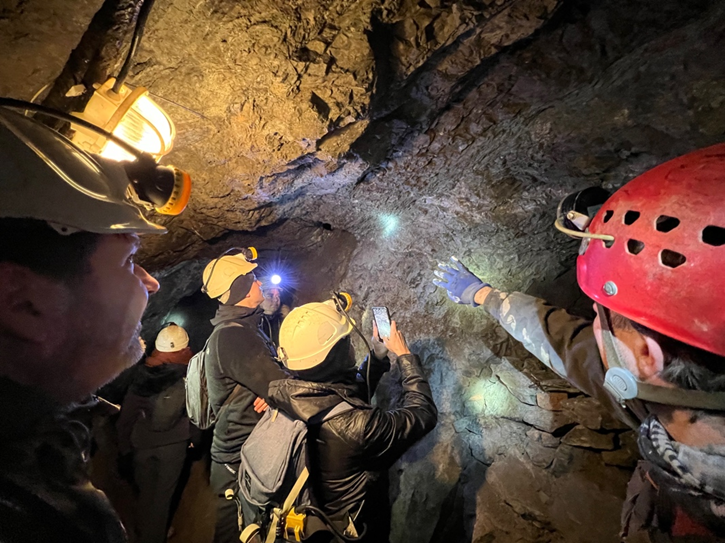
Upon arrival at the site, we received comprehensive training and were equipped with all necessary safety gear, including a rescue breathing apparatus. In the mine, we received an overview of the deposit along with a detailed explanation of all activities related to its exploration. They also showed us several quartz veins filled with various sulphides, primarily pyrite and chalcopyrite, that often
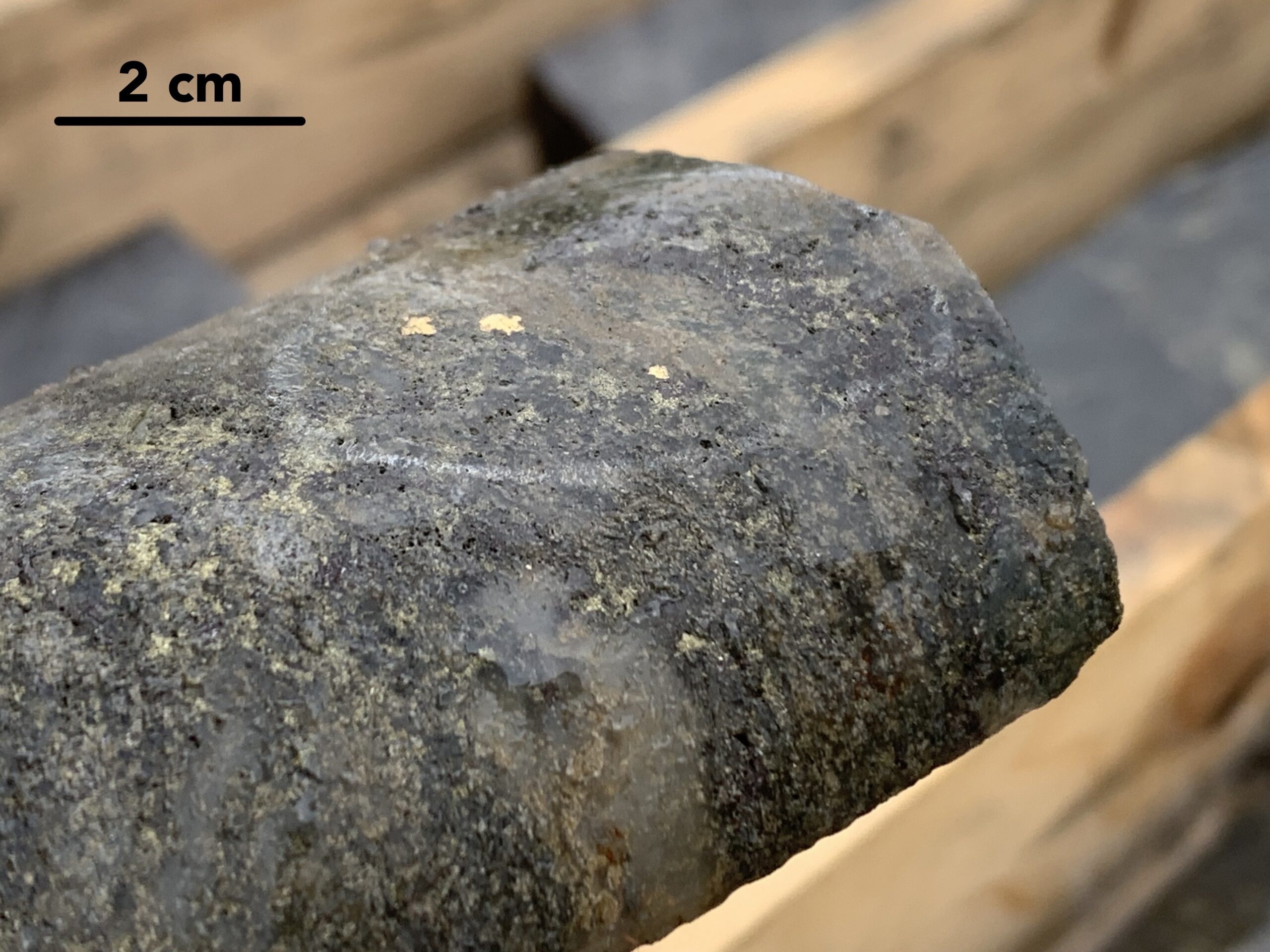
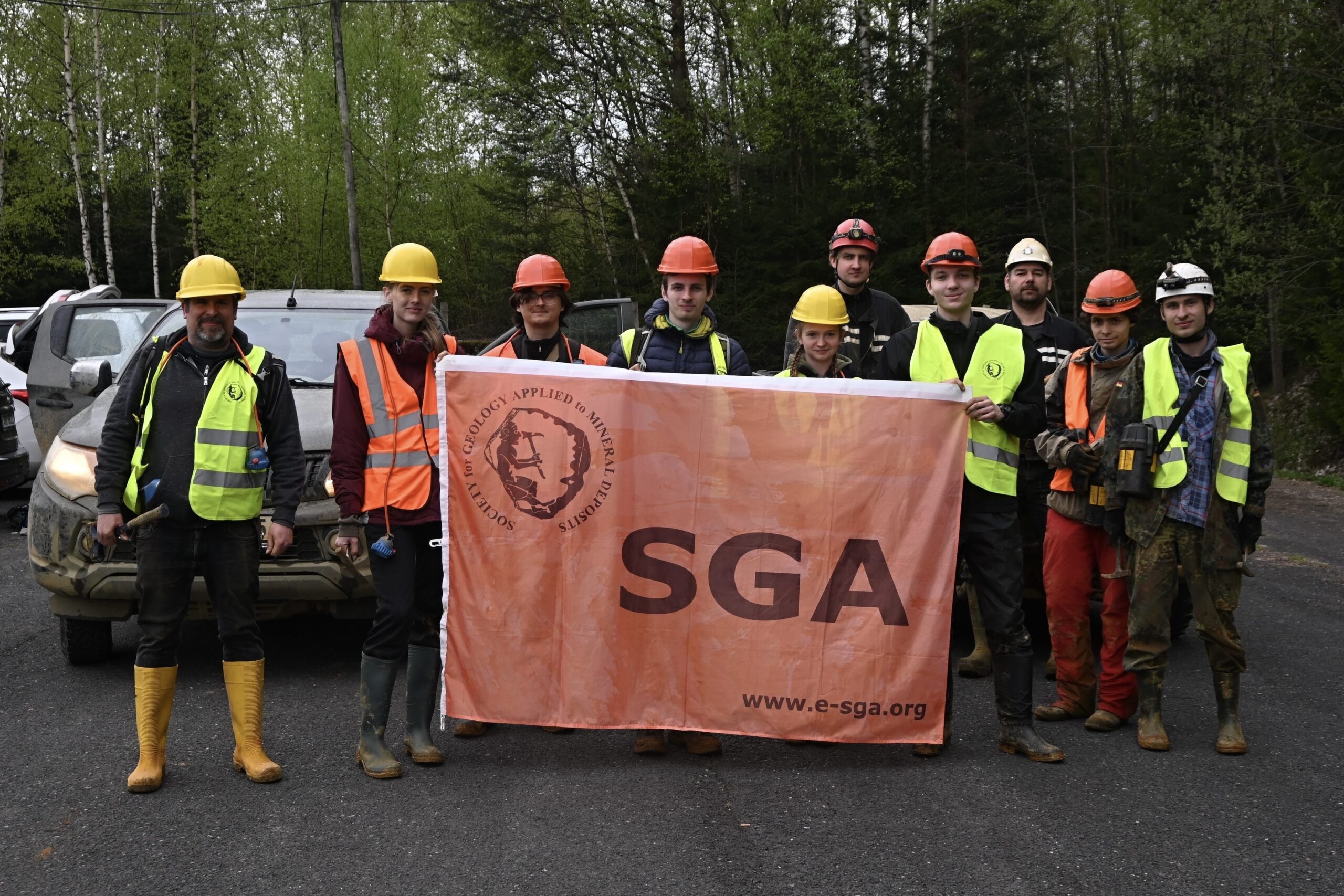
contain microscopic grains of gold. Our time underground was, for safety reasons, limited, so the rest of the briefing took place in an outdoor building where DIAMO stores the drill cores from the exploration (Fig. 1). Visiting the mine was an unforgettable experience for all of us, and we are very grateful to Tomáš Žitný, as well as whole DIAMO for making it possible (Fig. 2).
At the end of the second day, we visited the nearby Poštovní štola adit from the medieval ages (Fig. 3). The earliest records of copper and other ore mining at this site date back to the early 16 th century. This brief stop enriched our geological knowledge with the historical development of mining in the Zlaté Hory ore district. On the final day, we made one last stop at a marble quarry near the town of Lipová, where we learned interesting details about the local marble, its extraction methods, and the reclamation efforts carried out after mining operations.
Fig. 1 – A drill core containing macroscopic grains of goldFig. 2 – A group photo with our guides from DIAMOFig. 3. The Poštovní štola adit in Zlaté Hory
Comments Off on SGA Keynote Speaker Dr. Jakub Ciążela in Prague
Jan Mráček, SGA Student Chapter Prague
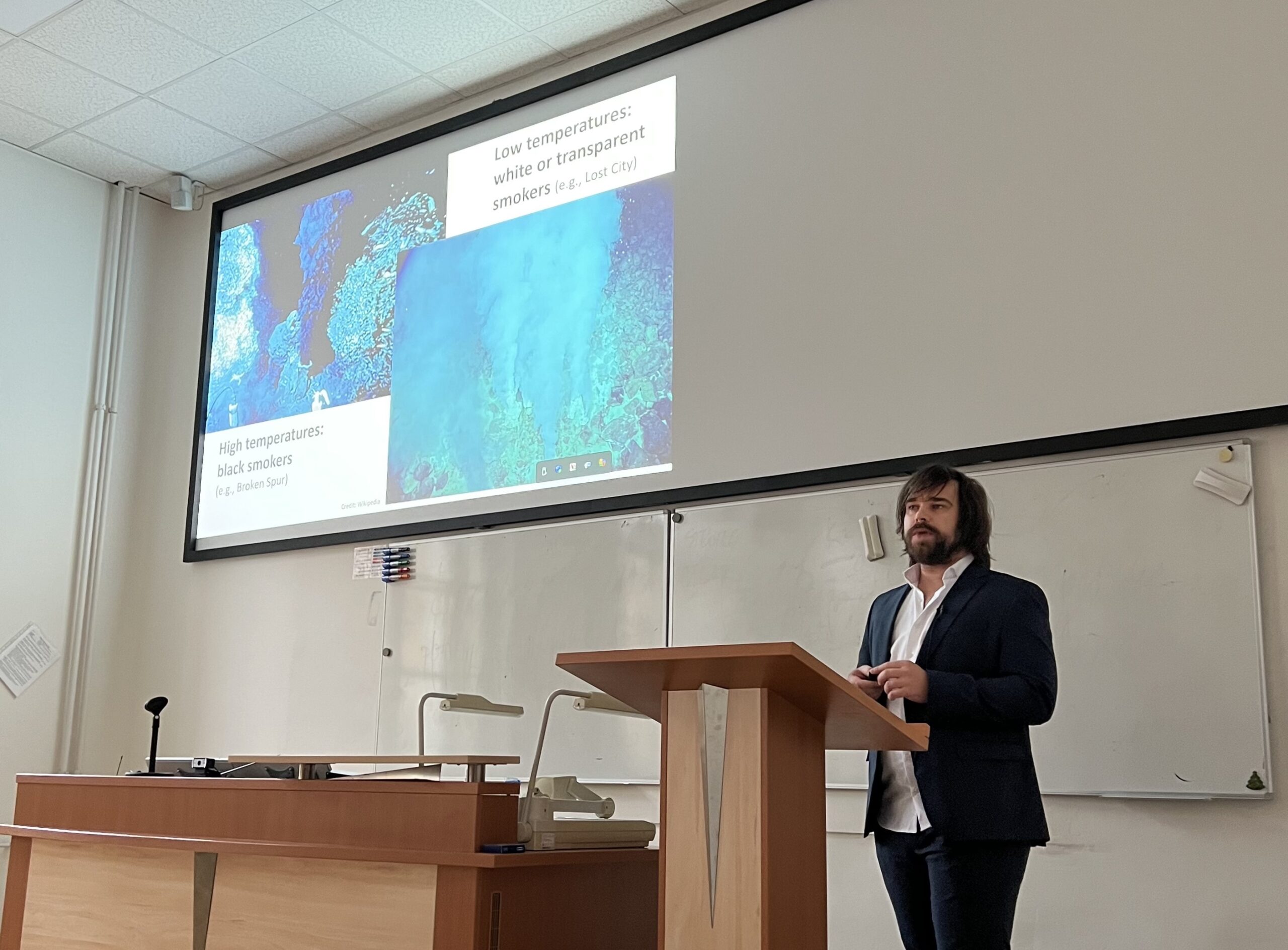
The SGA Student Chapter Prague had the honour of welcoming Dr. Jakub Ciążela to a special seminar titled Unlocking the Ocean’s Treasure: Metal Migration, Ore Formation, and Exploration of Polymetallic Deposits in the Oceanic Lithosphere. The lecture took place on December 3rd at the Faculty of Science, Charles University in Prague.
Dr. Ciążela completed his master’s and PhD degrees at Leibniz Universität Hannover, Germany, where he focused on the geochemistry of chalcophile elements in the oceanic crust. During his postdoctoral studies at the Polish Academy of Sciences, he became actively involved in extraterrestrial geology. He is now an Assistant Professor at the Polish Academy of Sciences, where he continues to explore these two interesting fields – planetary geology and ore formation processes in the Earth’s mantle and the lower oceanic crust.
This lecture provided a unique perspective on the fascinating processes of metal migration, which are crucial for understanding geological processes and the formation of mineral deposits. In his lecture, Dr. Ciążela introduced us to the different types of polymetallic deposits in the oceanic lithosphere, explained their formation, and presented the results of his research. He shared his own experiences from drilling ship expeditions and introduced us to a fascinating methodology for studying such polymetallic systems. The seminar was also streamed online, with 20 participants joining from various countries around the world, including Poland, Germany, Italy, Australia, and Argentina. The lecture was recorded as well – if you are interested in accessing the recording, please email the president of the SGA Student Chapter Prague, Jan Mráček (mracekja@natur.cuni.cz).
The seminar was held in cooperation with the SGA Student Chapter Prague and the Institute of Geochemistry, Mineralogy and Mineral Resources, Faculty of Science, Charles University. The event was fully funded by the SGA Keynote Speaker Program.
Acknowledgments
We sincerely thank Dr. Jakub Ciążela for his outstanding lecture and extend our gratitude to the SGA Keynote Speaker Program for its essential support in making this event a success.
Fig.1 – Dr. Ciążela delivering the lecture in the Mineralogy Lecture Hall.
Comments Off on SGA Student Chapter Prague – The 20th Anniversary
Since 2022 is the year of celebrations for the SGA Student Chapter Prague, we have decided to organize the annual SGA Prague Christmas meeting and the 20th Anniversary celebration on 7th December. The event took place at the Faculty of Science, Charles University. On the same day we organized an excursion to the gold mine near Jílové u Prahy took place for those interested.
SGA
The Society for Geology Applied to Mineral Deposits (SGA) is an international scientific society that promotes the science of mineral deposits. The society consists of over 1300 members among researchers, professionals and students from universities, industry and governments interested in economic geology, mineral resources, industrial minerals and environmental aspects related to mineral deposits. SGA regularly organizes conferences, international courses and workshops. The next SGA Biennial Meeting will be held in Zürich, Switzerland between 28th August and 1st September 2023. An integral part of the organization is the long-term support of geoscience students through the SGA Educational Fund.
History of the SGA Student Chapter Prague
This year marks exactly 20 years since several students from Charles and Freiberg Universities founded the first-ever SGA Student Chapter. In 2002, a joint Prague-Freiberg Chapter was established by Dr. Anna Vymazalová and Dr. Alex Otto, both master students at the time. This newly formed Chapter’s first event was an excursion to the Svornost mine in Jáchymov, Czech Republic in April 2003. Subsequently, a division occurred and the independent SGA Student Chapter Prague was established. Despite the difficulties during the years 2020 and 2021 caused by the COVID-19 pandemic, the SGA Student Chapter Prague has around 70 members.
This year, we celebrate two significant anniversaries simultaneously—the 20th anniversary of the existence of the SGA Student Chapter and the 10th president in office.
SGA Student Chapter Prague Christmas meeting
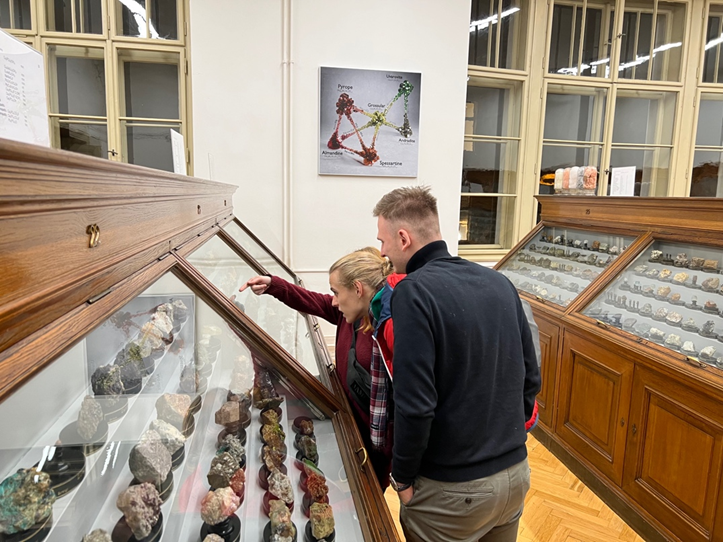
We are pleased that 83 SGA supporters from the Czech Republic, Germany, Portugal, Spain, Switzerland and Slovakia gathered for the anniversary celebrations. Eleven of them took part in the international field trip. The official program in the Mineralogical lecture room started at 4:30 p.m. with an opening speech by President Jan Kamenský. This was followed by a lecture by Ivan Mateo Espinel Pachon from the University of Geneva on the topic: “Controlling the redox evolution of arc magmas on continental margins: an approach to melt inclusion”. This lecture has followed a presentation by Dr. Anna Vymazalová, one of the founders of the SGA Student Chapter Prague, with her talk on the history of the SGA Student Chapter Prague. Afterwards, representatives of the student associations SEG-SGA Barcelona and SGA Colombia-Bogóta gave a short presentation of their activities and encouraged students to cooperate internationally. After the presentations, we visited the Mineralogical Museum of the Faculty of Science and the Chlupáč Museum. The entire program ended with a meeting in the Malé sbírky lecture room, where we had a unique opportunity to discuss plans for upcoming years.
Fig. 1 – Excursion to the Pepř mine near Jílové u Prahy, author of the photo: Jan MráčekFig. 2 – Tour of the Mineralogical Museum at the Faculty of Science, author of the photo: Jan Mráček
We would like to thank our sponsors, without whose help the organization and provision of the program would be very complicated. In particular, we would like to thank the Faculty of Science of Charles University, Řeznictví Jiří Görgl (Butchery Jiří Görgl), Pekařství Kabát (Bakery Kabát) and the Vinařství Cenek (Winery Cenek).