ICYG 2026

Dear Colleagues,

We are delighted to invite you to participate in the XXV International Conference of Young Geologists (ICYG 2026), which will take place from 14 to 17 May 2026 at the Renaissance castle in Kostelec nad Černými lesy, just 40 km east of Prague, Czech Republic. Conference is organized by our SGA Chapter Prague and the Faculty of Science, Charles University.

ICYG is an annual international conference for emerging geoscientists from undergraduate (BSc) students presenting their first scientific results to MSc and PhD candidates and early-career researchers. We welcome contributions from the full spectrum of geoscience topics, and the ones focused on economic geology and mineral deposits will be part of the SGA session at the conference.

Thanks to generous support from Charles University and the Society for Geology Applied to Mineral Deposits (SGA), ICYG 2026 will offer financially accessible participation for students, including on-site accommodation and full board with pre-conference ice-breaker in local brewery, and will feature an SGA-sponsored keynote lecture by Prof. Simon M. Jowitt (Nevada Bureau of Mines and Geology) as well as SGA travel grants for selected students working in economic geology and mineral deposits.


Key dates
Registration deadline: 15 February 2026
Abstract submission deadline: 28 February 2026

For detailed information on the scientific programme, venue, post-conference excursion, fees, travel grants, and submission guidelines, please visit the conference website: www.icyg.eu.

We kindly ask you to share this invitation and the attached First Circular with your colleagues and students to ensure wide participation and a vibrant exchange of scientific ideas.

We look forward to welcoming you to the Czech Republic for an inspiring and collaborative meeting of young geoscientists!

With best regards,

ICYG 2026 Organising Team
XXV International Conference of Young Geologists
Kostelec nad Černými lesy, Czech Republic

e-mail: jan.kulhanek@natur.cuni.cz (lead organiser)
web: www.icyg.eu
fb: facebook.com/icyg.conference

Christmas Party 2025 – Recap

On December 9th, we held our annual SGA Christmas party, where members could enjoy great food, drinks (outstanding beer from a local brewery Pivovar Prokopák), music, and a pleasant festive atmosphere. The evening also included a presentation summarizing this year’s activities and introducing plans for the upcoming year. As always, the traditional geological raffle was a highlight. Members had the chance to win interesting mineral specimens from various parts of the world and compete for the grand prize, this year, a beautiful fluorite from Mongolia. A big thank you to 4C Minerals and Sběratel minerálů for their support! We were also delighted to welcome members from SEG Freiberg, who joined us for the evening and made the event even more special. We wish everyone a wonderful Christmas and lots of success in the new year!

Christmas Party 2025

Dear friends and colleagues, we are pleased to invite you to the SGA Student Chapter Prague Christmas Party, which will take place on Tuesday, December 9, starting at 6:00 p.m. (LS, Albertov 6, 1st floor). You can look forward to delicious refreshments, entertainment, and great company. Once again this year, you will have the opportunity to try your luck in a geology-themed raffle. We hope you will accept our invitation and join us in celebrating the Advent season.

Field trip to Bohemian Karst: Palaeozoic limestone quarries

On August 28, a geological and paleontological field excursion to the Bohemian Karst took place, including visits to several significant sites.

Kosov quarry

The first stop was the Kosov quarry, an important locality of Silurian period. In a total of seven quarry levels, complete sequences of black and calcareous shales, various types of limestones, and also volcanic rocks such as basalt tuffs, volcanic flows, bombs, and tuffitic limestones are exposed. The quarry is also known for the discovery of carbonized plant remains of the genus Cooksonia, which provide evidence of early terrestrial colonization by primitive plants already during the Silurian period.
The next stop was the active large quarry Čertovy schody, one of the largest producers of lime and limestone products in the Czech Republic. The purest and highest-quality limestone in the country is extracted there.

Čertovy schody quarry

The excursion concluded at the Plešivec quarry, where limestone was once mined. Today, the quarry is an important paleontological site rich in fauna from the Lower Devonian. Notable finds include numerous trilobites, brachiopods, bryozoans, and bivalves.

Group picture

18th SGA Biennial Meeting

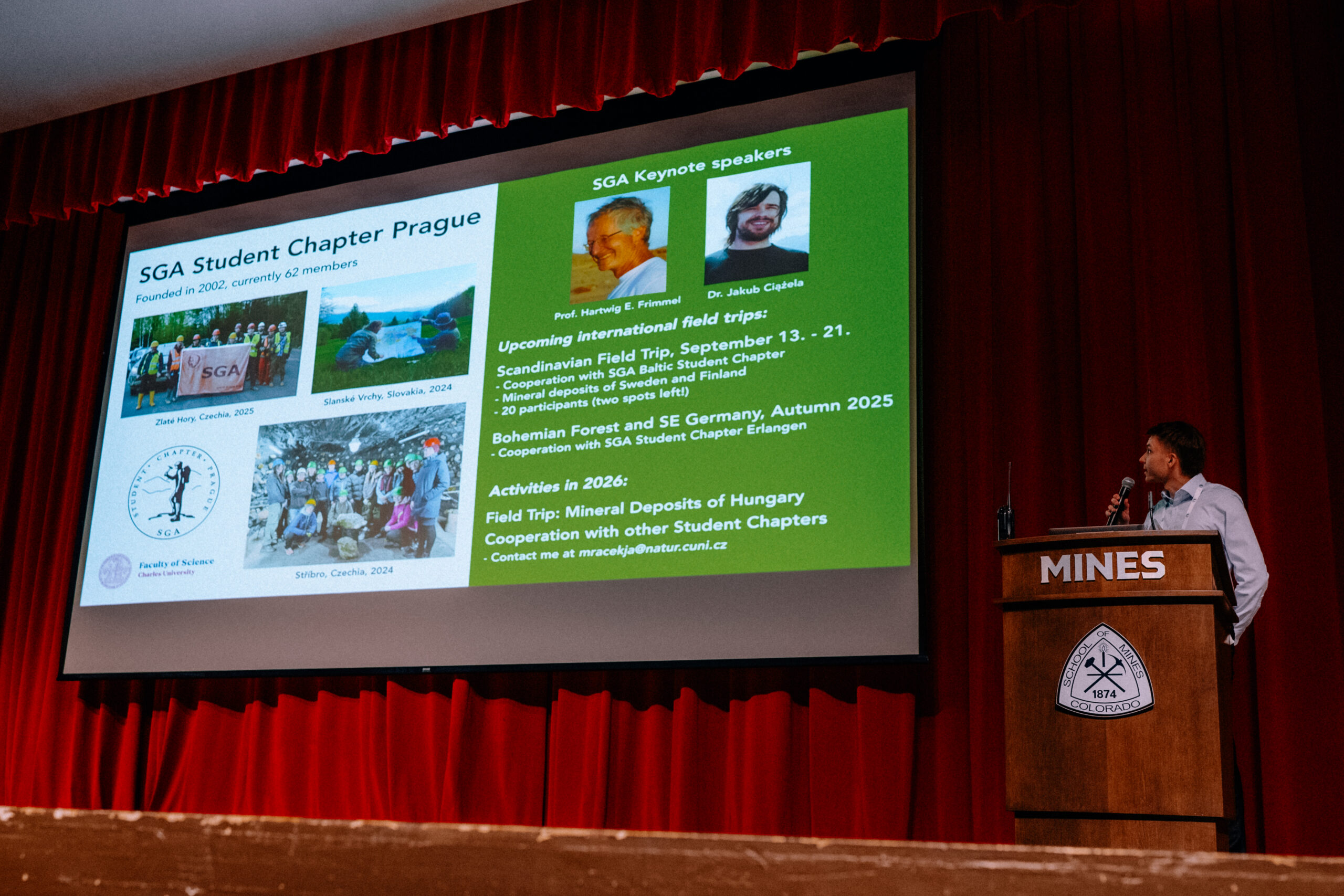
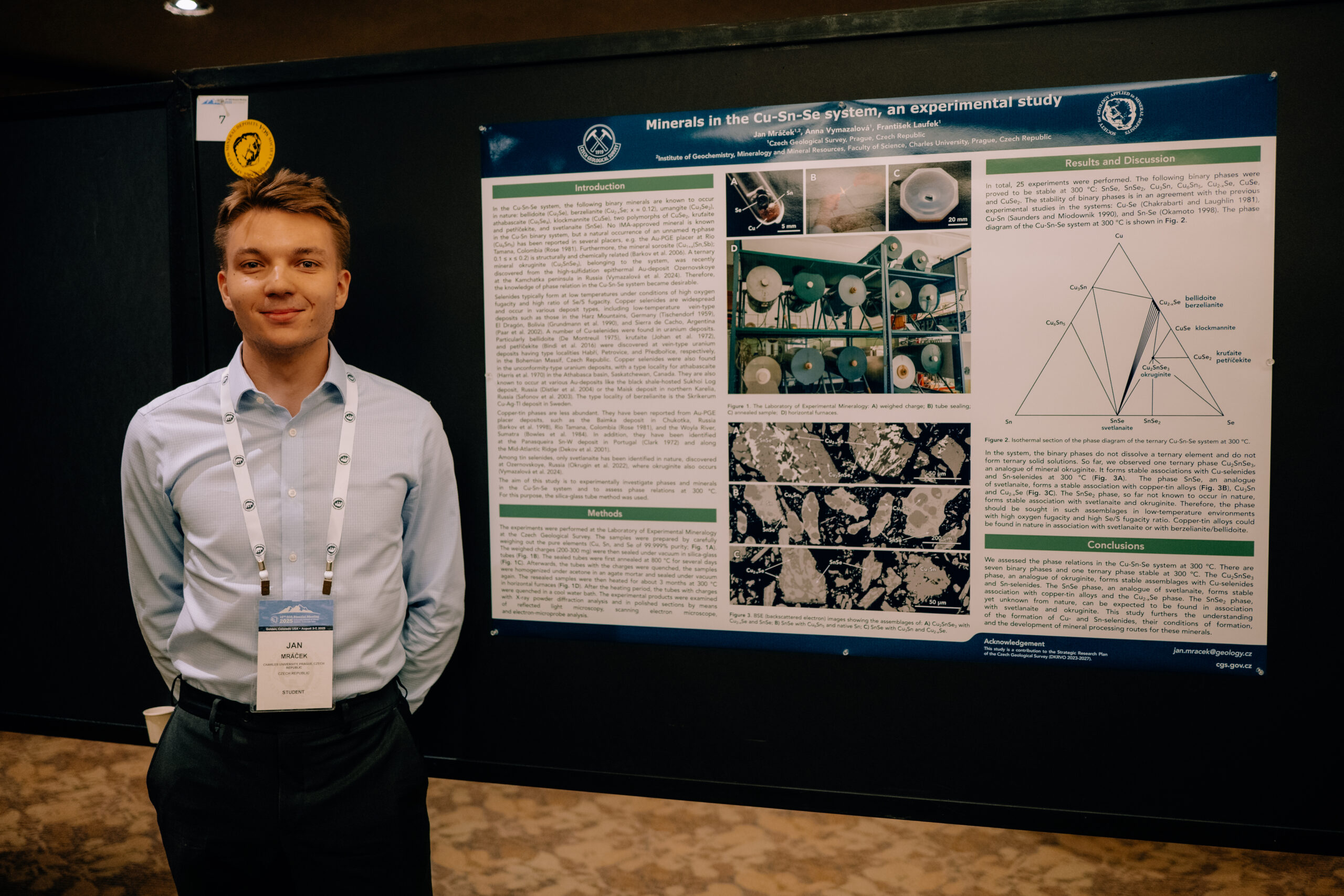
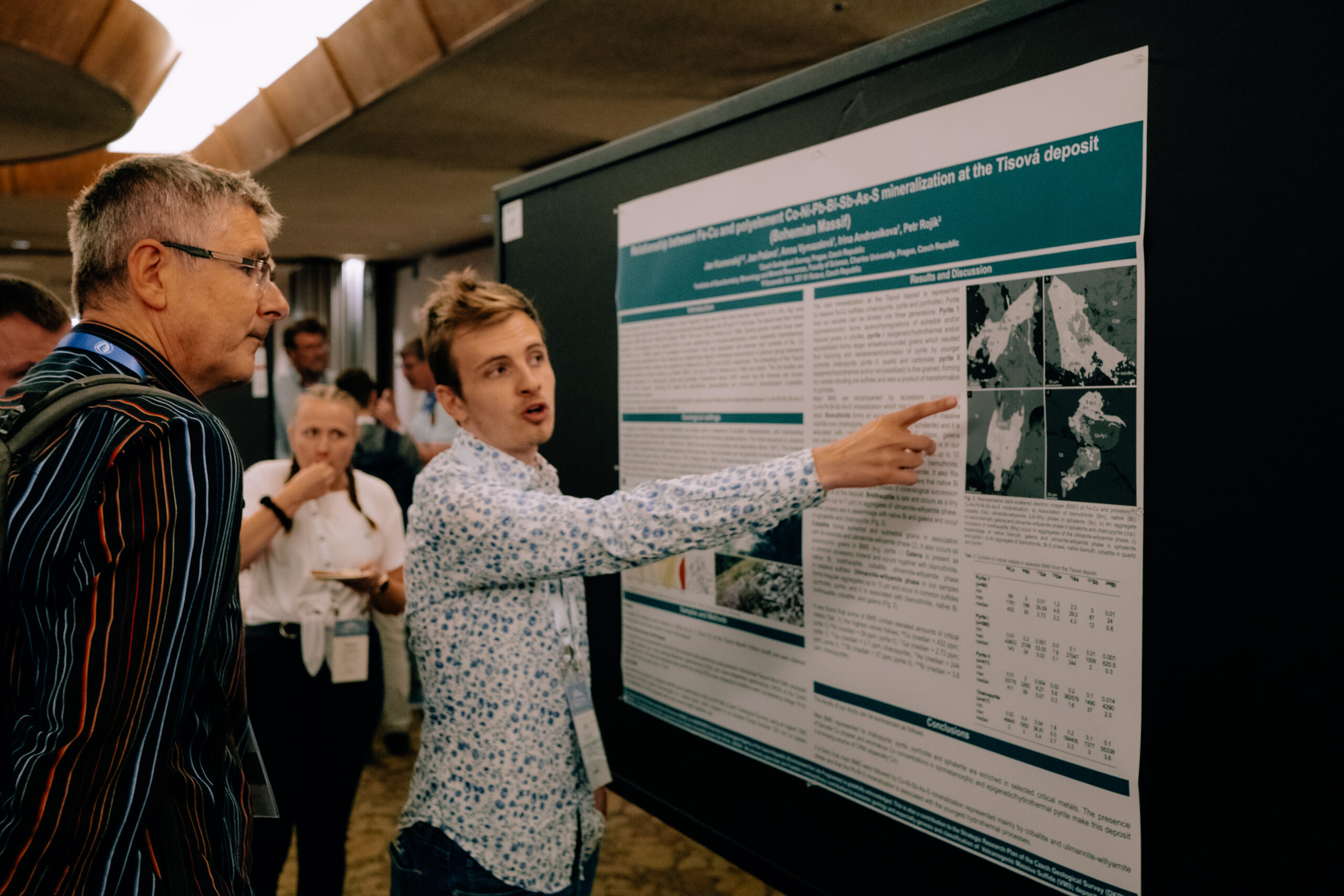
In August, we had the honor of representing the SGA Student Chapter Prague and Charles University at the 18th SGA Biennial Meeting in Golden, Colorado. We presented our research, joined inspiring lessons and plenary talks on ore deposits and critical minerals, built international networks and friendships, and in person explored world-class geology on several field trips. We are grateful to SGA for organizing this incredible meeting and for their continuous support of geology students. Get ready for the 2027 19th SGA Biennial Meeting in Perth, Australia!

Field Trip to the Au-VMS deposit Zlaté Hory, Czech Republic

Jakub Ptáček, SGA Student Chapter Prague

At the end of April 2025, the SGA Student Chapter Prague organised another of its many excursions –
this time to Zlaté Hory (Golden Mountains), located in the northern part of the Jeseníky Mountains.
The goal of the excursion was to explore local geological points of interest, including minerals of
Alpine paragenesis and those associated with the rock listvenite („krupník“ in Czech). The highlight of
the trip was a descent into the Zlaté Hory gold mine, where exploration is currently underway on a
previously unmined gold-bearing body. Nine chapter members participated in the three-day excursion,
on which members Jan Mráček, Jan Kamenský, and Michal Čurda took charge of both the logistical
coordination and the provision of expert guidance. The Zlaté Hory area geologically belongs to the
Variscan orogenic zone of the Bohemian Massif, also known as the Moravo-Silesian Zone. It lies in
the highly deformed contact zone between the Keprník and Desná units (domes). The area’s geological
evolution is highly complex and remains an active subject of scientific discussion.

From a geological perspective, the two units differ significantly and undoubtedly had distinct origins.
The Keprník Unit is composed primarily of strongly metamorphosed sedimentary and volcanic rocks,
such as paragneisses, phyllites, and amphibolites, which are characterised by a high-grade
metamorphism typical of the amphibolite facies. In contrast, the younger Desná Unit consists mainly
of weakly metamorphosed sediments, including phyllites, schists, and greenschists, corresponding to
the greenschist facies. The most widely accepted interpretation suggests that the Keprník Unit forms a
nappe structure thrust eastward over the (para)autochthonous Desná Unit.

The first stop of the excursion was the locality Sobotín, known for its well-formed epidote crystals and
as a classic site for the preview of Alpine paragenesis minerals. Although previous extensive
collecting by mineral enthusiasts has reduced the locality’s productivity, several noteworthy specimens
were nevertheless obtained for the collection. The epidote veins at this site were originally discovered
by chance during the construction of a road leading to the next stop of the excursion – the nearby
Smrčina quarry. The primary focus at this locality was the rock listvenite, which was historically
utilised in local ironworks. In addition to listvenite, collectors can also find talc and small but well-
formed magnetite crystals. The final stop of the day was the beryl-bearing pegmatites of Střelecký Důl
near Maršíkov and its surroundings. While the pegmatite at Střelecký Důl was historically mined
primarily for feldspar, the locality is best known for its exceptional beryl crystals, including occasional
aquamarine, which could reach lengths of up to 10 cm.

The second day of the excursion was dedicated entirely to the modern gold mine operated by the state-
owned company DIAMO, located in the Zlaté Hory ore district. Between 1990 and 1993, underground
mining was conducted here, targeting gold hosted in quartz veins alongside pyrite, sphalerite, galena,
and other sulfide minerals. Currently, exploration of the deposit is underway in the previously
unmined sections of the ore body due to its potential for future extraction. The investigation involves
drilling across the old mine adits to estimate the remaining reserves. According to information from
DIAMO, as of 2025, approximately 4 tonnes of gold, 500 tonnes of copper, and significant quantities
of other commodities, such as zinc, germanium, and gallium, have been identified as potential
resources.

Upon arrival at the site, we received comprehensive training and were equipped with all necessary
safety gear, including a rescue breathing apparatus. In the mine, we received an overview of the
deposit along with a detailed explanation of all activities related to its exploration. They also showed
us several quartz veins filled with various sulphides, primarily pyrite and chalcopyrite, that often

contain microscopic grains of gold. Our time underground was, for safety reasons, limited, so the rest
of the briefing took place in an outdoor building where DIAMO stores the drill cores from the
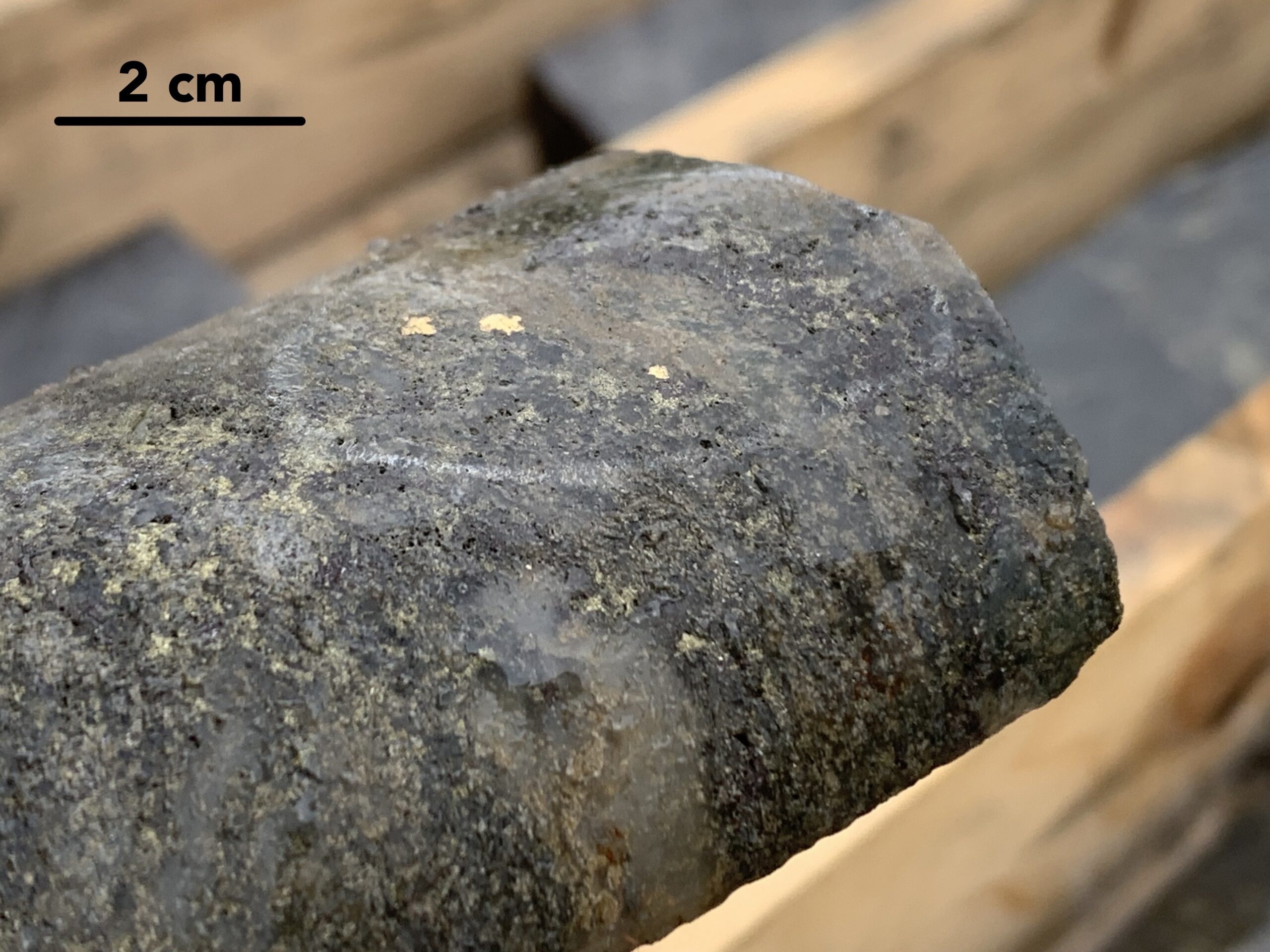
exploration (Fig. 1). Visiting the mine was an unforgettable experience for all of us, and we are very
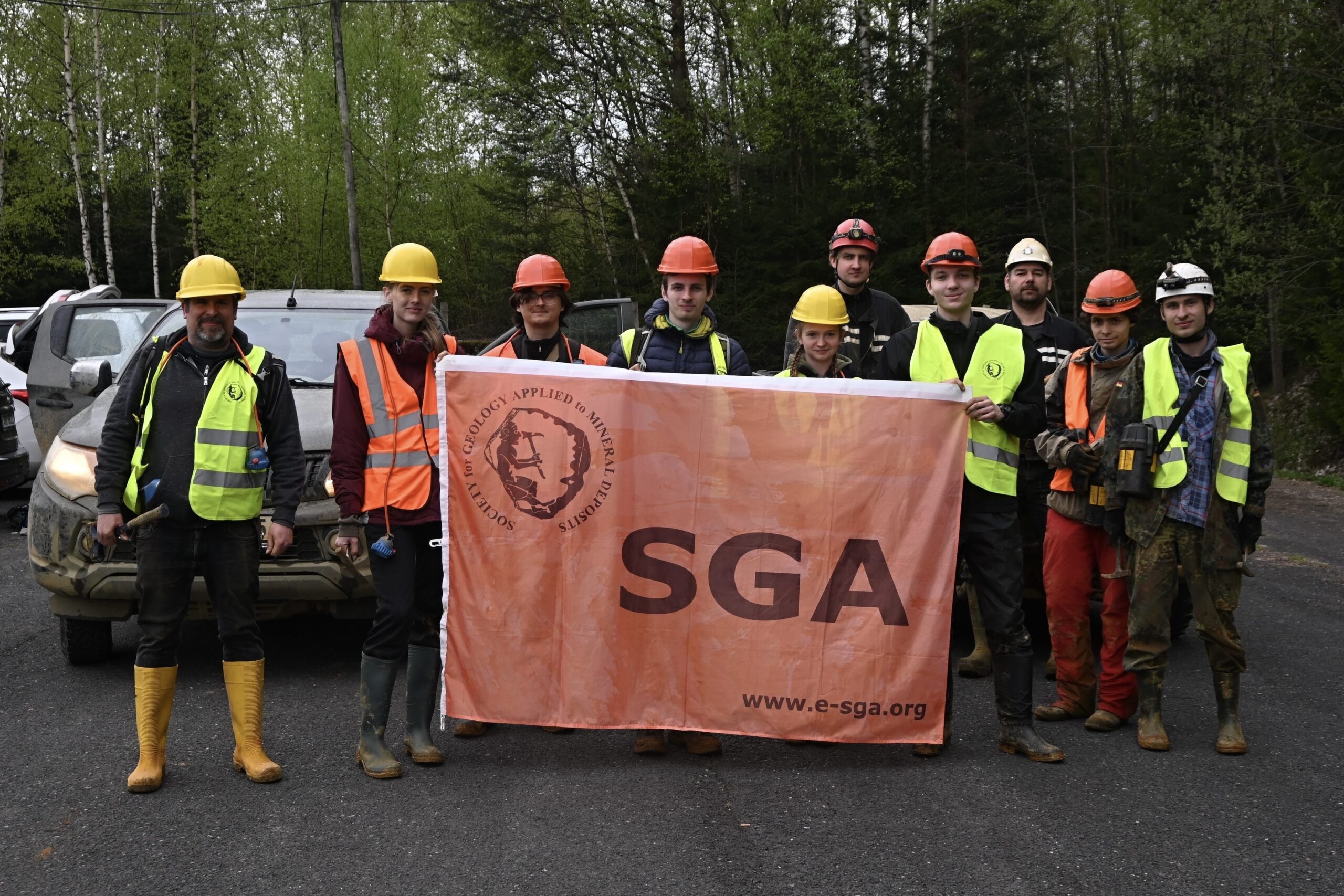
grateful to Tomáš Žitný, as well as whole DIAMO for making it possible (Fig. 2).

At the end of the second day, we visited the nearby Poštovní štola adit from the medieval ages (Fig. 3).
The earliest records of copper and other ore mining at this site date back to the early 16 th century. This
brief stop enriched our geological knowledge with the historical development of mining in the Zlaté
Hory ore district. On the final day, we made one last stop at a marble quarry near the town of Lipová,
where we learned interesting details about the local marble, its extraction methods, and the
reclamation efforts carried out after mining operations.

Fig. 1 – A drill core containing macroscopic grains of gold
Fig. 2 – A group photo with our guides from DIAMO
Fig. 3. The Poštovní štola adit in Zlaté Hory
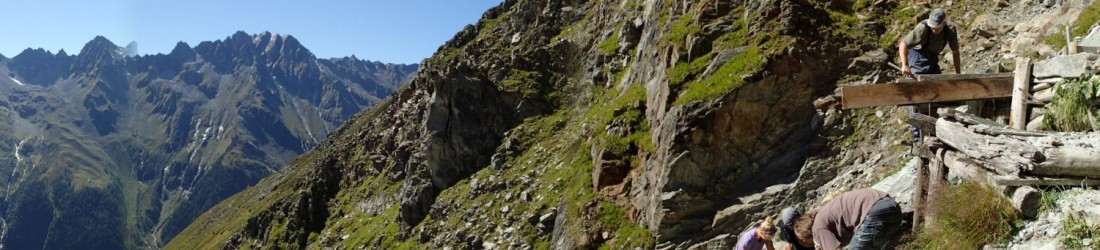
SGA Keynote Speaker Dr. Jakub Ciążela in Prague

Jan Mráček, SGA Student Chapter Prague

The SGA Student Chapter Prague had the honour of welcoming Dr. Jakub Ciążela to a special seminar titled Unlocking the Ocean’s Treasure: Metal Migration, Ore Formation, and Exploration of Polymetallic Deposits in the Oceanic Lithosphere. The lecture took place on December 3rd at the Faculty of Science, Charles University in Prague.

Dr. Ciążela completed his master’s and PhD degrees at Leibniz Universität Hannover, Germany, where he focused on the geochemistry of chalcophile elements in the oceanic crust. During his postdoctoral studies at the Polish Academy of Sciences, he became actively involved in extraterrestrial geology. He is now an Assistant Professor at the Polish Academy of Sciences, where he continues to explore these two interesting fields – planetary geology and ore formation processes in the Earth’s mantle and the lower oceanic crust.

This lecture provided a unique perspective on the fascinating processes of metal migration, which are crucial for understanding geological processes and the formation of mineral deposits. In his lecture, Dr. Ciążela introduced us to the different types of polymetallic deposits in the oceanic lithosphere, explained their formation, and presented the results of his research. He shared his own experiences from drilling ship expeditions and introduced us to a fascinating methodology for studying such polymetallic systems. The seminar was also streamed online, with 20 participants joining from various countries around the world, including Poland, Germany, Italy, Australia, and Argentina. The lecture was recorded as well – if you are interested in accessing the recording, please email the president of the SGA Student Chapter Prague, Jan Mráček (mracekja@natur.cuni.cz).

The seminar was held in cooperation with the SGA Student Chapter Prague and the Institute of Geochemistry, Mineralogy and Mineral Resources, Faculty of Science, Charles University. The event was fully funded by the SGA Keynote Speaker Program.

Acknowledgments

We sincerely thank Dr. Jakub Ciążela for his outstanding lecture and extend our gratitude to the SGA Keynote Speaker Program for its essential support in making this event a success.

Fig.1 – Dr. Ciążela delivering the lecture in the Mineralogy Lecture Hall.

Field trip to Western Bohemia, Czech Republic

Jakub Ptáček1,2, Jan Mráček1,2

1Faculty of Science, Charles University, Prague, Czech Republic

2Czech Geological Survey, Prague, Czech Republic

SGA Student Chapter Prague organized its 2024 autumn field trip to selected geological sites in the Western Bohemia. From October 25 to 28, 2024, a total of 25 members participated in the excursion.

1st day

The first stop of our field trip was the Příbram mining district, located in Central Bohemia. This district is one of the largest uranium-polymetallic hydrothermal vein-type deposits in the world (Pauliš et al. 2016). The veins in this district were formed during the Variscan orogenesis, with the vein system extending over an area of approximately 25 x 2 km at the boundary between the Teplá-Barrandian Unit (TBU) and the Moldanubian Zone. The veins are hosted in Neoproterozoic to Lower Paleozoic sedimentary or volcano-sedimentary rocks of the TBU, in close exocontact with the Upper Devonian to Carboniferous granodiorites of the Central Bohemian Plutonic Complex, separating TBU and the Moldanubian Zone of the Bohemian Massif (Černoch et al. 1995; Janoušek et al. 2010; Pauliš et al. 2016). On numerous tailing heaps, it is possible to collect primarily calcite vein material, occasionally accompanied by sphalerite, hematite, galena, and, more rarely, radioactive uraninite.

Our next stop was a historical underground kaolin mine in Nevřeň. The site features extensive hand-dug spaces, with halls reaching up to 12 meters in height and 8 meters in width, carved into Carboniferous arkosic sandstones and arkoses. The elevated kaolinite content in these sediments resulted from the weathering of nearby feldspar-rich plutonic bodies. Kaolinite remains one of the most significant natural resources in Western Bohemia.

The third stop of our journey was the Pb-Zn-Ag polymetallic deposit of the Stříbro mining district. Mining in Stříbro began in the 12th century. The village was given the name Stříbro which translates to English as “Silver“ because silver ore was found right under the surface. Unfortunately, the silver mineralization was present only at the uppermost part of the deposit. Upon our arrival, we visited a locality directly above the historical mine to collect samples with pyromorphite, which is a supergene mineral of Pb ore. Continuing our exploration of the deposit, we arrived at a nearby spoil heap close to the village of Sytno, where we found numerous quartz crystals, galena, and occasionally sphalerite. We concluded our visit to the Stříbro mining district with a guided tour of the historic Prokop adit (Fig. 1), located right in the town of Stříbro. Most common minerals include galena and sphalerite and in smaller amounts pyrite, marcasite, and chalcopyrite.

To conclude the first day, we visited Vlčí Hora hill near Černošín to collect crystals of amphibole (kaersutite) and pyroxene (augite). Vlčí Hora is a Neogene volcano formed as part of Cenozoic Central European Volcanic Province (CEVP), estimated to be approximately 12 million years old. It is located on the northwestern edge of the TBU, emplaced within the chlorite-sericite phyllites of the Proterozoic Blovice Accretionary Complex (Pauliš 2000; Navrátil and Šrein 1997). Well-formed crystals of kaersutite and augite weather out of the pyroclastics from this volcano. These crystals can reach lengths of over 5 cm, making this site highly sought after by local collectors.

Fig. 1: A group photo at the exhibition of the mineralogical collection of the Prokop Adit in Stříbro.

2nd day

The second day of the trip focused on the mining district of Michalovy Hory, located in the western part of the Teplá-Barrandian area. This region is primarily composed of Proterozoic metamorphic volcano-sedimentary rocks, including gneisses, amphibolites, and crystalline limestones. A distinctive feature of Michalovy Hory is the occurrence of supergene minerals, which form primarily through the weathering of common sulfides in the supergene zone. During our visit, we explored three locations: Dolní Kramolín (Ag-Pb-Zn polymetallic mineralization), Michalovy Hory (Ni ores), Chodová Planá (Cu-Pb-Zn mineralization).

The highlight of the second day was a nighttime collection of secondary uranium minerals using a UV light at Kladská (Fig. 2), one of the many geologically fascinating localities in the Slavkovský Les area. The Slavkovský Les lies on the boundary between the Saxothuringian Zone and TBU. Kladská, located in the western part of the Slavkovský Les, was historically mined for tin ore in greisen-type deposits. Today, it is well known for its uranium mineralization, primarily represented by uranium micas and various stages of altered uraninite (Plášil et al. 2016).

Fig. 2: Meta-autunite [Ca(UO2)2(PO4)2 · 6H2O] found at Kladská. Combination of white and UV (365 nm) light. Photo by J. Mráček.

3rd day

The first stop of the third day was the National Natural Monument Křížky, part of the Mnichovské hadce — the largest uncovered serpentinite body in the Czech Republic. This geological formation appears in a belt that stretches about 9 km in length and 2 km in width. In addition to the fascinating geology, we also explored the connection between different science fields. At this site, the influence of the serpentinite on the composition of the derived soils is clearly evident, as seen in the subsequent occurrence of endemic plants (e.g. Cerastium alsinifolium). These plants thrive in soils characteristic of serpentinite bedrock, which are rich in magnesium but deficient in essential nutrients (N, P, K).

The second stop of the day was the National Nature Reserve Soos, located in the center of the Cheb Basin. This site is a beautiful example of post-volcanic activity, where the movement of Tertiary tectonic faults opened a pull-apart basin with developing peat bogs and several mineral springs, highly enriched in CO2 (Fig. 3). The carbon dioxide can be also released from the water underground, accumulate within the layers of Tertiary sediments and rise to the surface through fractures, forming mofettes.

After a walk through the peat bog, the excursion continued north of Hazlov to the day’s next site, known as “U Cihelny.” In this small area in the westernmost part of the Czech Republic, contact metasomatic calcareous-silicate rocks called erlan are well exposed. The mineral vesuvian is fairly abundant here, alongside with other typical erlan minerals, such as diopside, grossular, anorthite, and quartz.

The final stop of the day was the radioactive spring Břetislav – Radonka, located in the Skalná – Bad Brambach area. In this area, there are 117 springs with elevated radon content (222Rn). Of these, 48 springs exhibited activity levels exceeding 1,500 Bq/l, the threshold in the Czech Republic for classifying water as mineral water. The Břetislav – Radonka spring is the most radioactive surface outflow in the Czech Republic, with activity levels ranging from 11,431 to 13,138 Bq/l and a flow rate of 2.5 l/min. Apart from its delicious taste, this spring is considered to be beneficial for your health.

Fig. 3: A group photo at the National Nature Reserve Soos.

4th day

The final day began with a visit to the Silvestr lignite mine, situated on the southern edge of the Sokolov Basin. Mining began here in 1939 as a small-scale operation. The lignite was extracted from the Antonín and Anežka seams, which reached thicknesses of up to 65 meters. With an overburden of only 10 meters, the site offered highly favorable conditions for mining development. In 1953, significant investments transformed the operation into a large open-pit mine. By 1955, annual lignite production exceeded 1 million tons, peaking in 1971 at 4.153 million tons. Mining ceased in 1981, with a total output of 90 mega tons of lignite and roughly 50 million m3 of overburden extracted. As the recultivation was only carried out in part of the Silvestr mine, the visited southern unrecultivated slope, represents a unique example of an open-pit mine “taken back by nature”. Here, the mine slope is dissected by a network of erosion gullies, rill washes, and erosion ravines, separated by ridges and pyramids, resembling the “Badlands” of the American West. This location provides an exceptionally instructive and active site for studying erosion processes, accumulation, and the impact of vegetation cover on geological processes. Despite (or perhaps because of) the absence of recultivation, this area has become a habitat for protected species and a nesting site for the sand martin (Riparia riparia) birds (Rojík 2008). Through the decision not to recultivate the site, a unique record of the cyclic wildfires of Miocene rainforests has been preserved. Rojík (2008) documented 57 trees in this location and interpreted it as a forest burning approximately 22 million years ago. The charred remnants of the forest are manifested by the presence of fusain, which is often mineralized by SiO2 modifications.

After visiting the lignite mine, the group traveled to Karlovy Vary to explore its world-famous spa springs. The highlight of this stop was an excursion to the technical utility room of Vřídlo, the largest thermal spring in Karlovy Vary. Vřídlo emerges at a temperature of 73°C and, due to the high pressure of CO2 gas, reaches a stable height of up to 12 meters. The spring has a flow rate of up to 2,000 l/min, and with a mineralization of up to 6.45 g/l the intake pipes in the complex need to be replaced frequently. While this location was not a collecting site, every participant took home a piece of aragonite pipe infill, a form of aragonite commonly known in the Czech Republic as vřídlovec.

The very last location of the entire excursion was a visit to the Doupovské Hory mountains and the famous mineralogical location of Valeč, well-known for findings of glassy opal – hyalite (Fig. 4). Valeč is situated on the southeastern slopes of the Doupovské Hory volcanic complex, formed as the NE branch of the CEVP. The lower part of this volcanic complex is the most exposed part and primarily formed by pyroclastics. At this site, coarse-grained slags from a local pyroclastic cone are overlain by a lava flow. At the interface between these layers, dissolved quartz material precipitated within fissures and vesicles, forming the glassy opals. The most striking specimens are crown-like aggregates, reaching sizes of up to 7 cm.  Some of the hyalites can also be covered with white layers of staffelite.

Fig. 4: Hyalite [SiO2 · nH2O] and staffelite [Ca5(PO4,CO3)3(F,O)] from the site Valeč. Photo by J. Mráček

References:

Černoch V, Staněk V, Škvor K (1995) Závěrečná zpráva ložiska Příbram. Diamo, s.p., SUL o.z., Příbram, 172 pp

Janoušek V, Wiegand BA, Žák J (2010) Dating the Variscan crustal exhumation in the core of Bohemian Massif: new U-Pb single zircon ages from the high-K calc-alkaline granodiorites of the Blatná suite, Central Bohemian Plutonic Complex. J Geol Soc London 167:347–360

Navrátil Z, Šrein V (1997) Krystalovaný olivín v tufech Vlčí hory u Černošína. Bull mineral-petrolog Odd Nár Muz (Praha) 4–5:177–178

Pauliš P (2000) Nejzajímavější mineralogická naleziště Čech. Kuttna, Kutná Hora, 112 pp

Pauliš P, Babka K, Sejkora J, Škácha P (2016) Uranové minerály České republiky a jejich nejvýznamnější naleziště. Kuttna, Kutná Hora, 557 pp

Plášil J, Sejkora J, Čejka J, Pavlíček R, Babka K, Škoda R (2016) Výskyt boltwooditu na uranovém ložisku Kladská (Česká republika). Bull mineral-petrolog Odd Nár Muz (Praha) 24:298–303

Rojík P (2008) Lesní požáry v miocénu sokolovské pánve. Zpravodaj Hnědé uhlí 4:19–27

Excursion to Slanské a Zemplinské vrchy 2024

The excursion took place from 24.4.-28.4.2024 in the locality of the neovolcanic Slanské vrchy mountain range, which extends in the eastern part of Slovakia east of the city of Prešov and with its length of 100 km extends to the territory of neighboring Hungary. The Slovak part of the mountain range consists dominantly of andesite stratovolcanoes reaching heights from 800 m.a.s.l. up to 1092 m.a.s.l., which stretch in a crescent-shaped chain from north to south. They were formed at the fault interface between the tectonic units of the Západní Karpaty (gemerikum, fatrikum) in the west and hard-to-classify units in the east – zemplinikum, Pozdišovsko-Inačovská unit. The first magmatic activity is dated to the Lower Miocene as a result of the Alpine orogeny. The well-recognizable stratovolcanoes include, from north to south: Šťavnica, Zlatobáňský, Makovica, Strechovy vrch, Bogota, Hradisko, Bradlo and Velký Milič. During their formation, parts of them also underwent significant hydrothermal transformation, during which ore and opal mineralization were established.

some visited localities:

Zlatá Baňa
– Zlatobansky stratovolcano
– 140 types of minerals described
-polymetallic (Mo-Cu-Pb-Zn-Ag) and antimony mineralization
– antimonite, amethyst, bournonite, boulangerite, metastibnite, cinnabarite, galena, pyrite

Fig. 1 – Zlatá Baňa locality

Dubnik
– the southern part of the Zlatá Baňa stratovolcano
– the formation of mineralization in andesite lava flows by post-magmatic hydrothermal activity
– significant deposit of opals (precious, milky,  hyalit)
-historical mining of cinnabarite as an ore of mercury

Fig. 2 – Dubnik precious opal

Herlany
-Strechový vrch stratovolcano
– the famous mäsovy opal of a brown-red color

The next part of the excursion took place in an elevation formed by Permocarbon continental sediments with anthracite and thick layers of tuffs – the Zemplinské vrchy. It is a synclinal structure of a complex structure consisting mainly of highly metamorphosed rocks (mainly gneisses, amphibolites).

Byšta – Brezina
-near the Velký Milič stratovolcano
– agates, chalcedony

Velká Trňa
– the western slope of the Zemplinské Vrchy
-Anthracite

Fig. 3 – Excursion checking the geological map in the field

SGA Student Chapter Prague autumn field trip to the Ore Mountains, Czech Republic (petrological overview, mining history, and current mineral deposits)

Jan Kamenský1,2, Jan Kulhánek1

1Faculty of Science, Charles University, Prague, Czech Republic
2Czech Geological Survey, Prague, Czech Republic

The SGA Student Chapter Prague honours its long-standing tradition of organizing an annual autumn field trip, and this year was no exception. Scheduled for late autumn (November 17–19, 2023) the trip was strategically planned to allow the participation of first-year bachelor geology students. Our destination of choice this year was the captivating mineralogical sites and historically significant localities of the Ore Mountains in the NW Czech Republic. Sixteen students participated in the excursion, led by chapter advisor Dr. Jan Kulhánek and president Jiří Klepp.

Geological settings:
The European Variscan Belt finds its easternmost exposure in Central Europe, shaping the Bohemian Massif. The Ore Mountains, a historically significant mining region, are situated within the Saxothuringian Zone (SZ), the SW–NE-trending belt which extends in the NW part of the Bohemian Massif (see Figure 1). The SZ is tectonically separated from the Teplá-Barrandien unit (TBU), lying along its southeastern border. Within this framework, the SZ represents the lower plate that underwent subduction beneath the hanging wall of the TBU along a prominent Variscan suture (e.g., Franke, 1989; Jouvent et al., 2022). Comprising primarily complexly over-thrusted and over-folded metamorphic nappe units of diverse metamorphic grades, the Ore Mountains exemplify accretionary wedge formation between the SZ and TBU.  From the deeper levels of the subduction channel, rocks of high- to ultra-high-pressure metamorphism, such as eclogites, blueschists, and coesite- or diamond-bearing paragneisses and granulites, have been exhumed (see Jouvent et al., 2022). The Variscian and post-Variscan tectono-magmatic activities are closely associated with the formation and subsequent remobilization of the polymetallic ores in the area. The Bohemian Massif also underwent significant magmatic and volcanic activity during the Cenozoic era. Much of this volcanic activity was concentrated along the Eger Rift, aligning with the Saxothuringian Variscan suture, and constituting the northeastern branch of the European Cenozoic Rift System (Ulrych et al., 2011). Evidence of this volcanic activity is also observable in the Ore Mountains, where well-preserved remnants of Cenozoic volcanism, erupting through the metamorphic basement, form prominent hills in the surrounding landscape.

Figure 1. The schematic geological map of the Saxothuringian Zone according to Faryad & Kachlík (2013).

1st day:
The field trip began at the hut at Boží Dar, an old mining town near the Czech-German border, on the evening of November 16, 2023, which served as our base for the entire excursion. The following morning, November 17th, visit of several localities followed after the broad geological introduction at the hut. Our first visit took us to Abertamy town, where we visited private collection of mining artifacts and ore minerals sourced from the surrounding localities, such as Abertamy, Jáchymov, or Stříbro.

Continuing our trip, we embarked on a brief tour of the surrounding of the closed Mauriticius mine, the oldest tin mine in the Czech part of the Ore Mountains, with its origins tracing back to the 16th century. This historical site, now open for tourists, offered a glimpse into centuries-old mining practices. Our time at the Mauriticius mine also afforded opportunities for mineralogical sampling, with notable finds including specimens of hematite and quartz (amethyst variety) sourced from the mine’s excavation sites and observation of the metasomatic process causing formation of greisens and associated tin mineralization along the veins cutting the granitic body. In the vicinity of the Mauritius mine was also possible to observe Schnepp’s pinge, a sinkhole formed atop the remnants of a former tin mine, following the steep vein planar orientation. In the vicinity of the Mauritius mine was also possible to observe Schnepp’s pinge, a sinkhole formed atop the remnants of a former tin mine, following the steep vein planar orientation.

Our itinerary then led us beyond the confines of the Ore Mountains to the significant mineralogical site of Huber Stock, situated near Horní Slavkov (GPS: 50° 8′ 19″ N, 12° 48′ 28″ E). Geologically characterized as a greisenized plutonic elevation, Huber Stock stands as a testament to the region’s diverse mineral wealth, with notable occurrences of tungsten and tin mineralization. Historical records indicate subsurface mining activities dating back to the 13th century, with a notable period of pit quarry operations from 1973 to 1976. Notably, Huber Stock boasts a rich mineralogical diversity, with 117 documented minerals, including five designated type localities, underscoring its significance in the field of mineralogy.

2nd day:
Our second day of the trip began with a visit to Meluzína Hill, a prominent feature in the landscape. Comprised mainly of eclogite, a high- to ultra-high metamorphic rock, Meluzína Hill offers insights into the region’s geological history. Originating from the subducted oceanic Saxothuringian plate, the rock was subducted deep beneath the TBU plate into the Earth’s mantle before being exhumated back to the crustal levels, shedding light on past plate tectonic processes. Discussions at the site focused on reconstructing the pressure-temperature conditions that shaped these rocks, along with an examination of the “atoll texture” of garnets commonly observed in metamorphic rocks of the area.

Our journey then took us to Horní Halže, where we explored remnants of iron ore mining. Here, a small heap served as a reminder of the area’s industrial past, with quartz veins often displaying a distinct violet color, earning the site the nickname “Amethyst heap.”

Next, we visited Mědník Hill in Měděnec, where iron ore extraction occurred from the 15th to the 19th century. The site’s skarn body, associated with the polymetallic mineralization, showcased visible garnet, diopside, and magnetite grains, providing insights into the region’s mining heritage.

Finally, we arrived at Volyně u Kadaně, a forested area housing loose rocks indicative of mining activity focused on a quartz hydrothermal vein renowned for the associated fluorine and tungsten mineralization. Characterized by a brecciated and honeycombed texture due to fluorite leaching, the vein revealed small fluorite and scheelite crystals, well-recognizable under the short-wave UV light (Figure 2).

Figure 2. Photo of collected scheelite-rich samples from the site Volyně u Kadaně under short-wave UV light. Photo by A. Ignasheva.

3rd day:
Our final day began with a visit to the Kovářská site, where we examined fluorite-barite veins that were actively mined in the 1970s and 1980s. Though mining activities have ceased, remnants of these veins remain, offering opportunities for mineral collection. Participants had the chance to collect specimens of fluorite and barite from surrounding mining heaps, providing tangible connections to the area’s mining history. Moving on, we also visited a reclaimed heap near Hradiště u Kadaně, focusing on collecting hematite crystals, characteristic of the area. Our excursion concluded at the Blahuňov locality, known for hydrothermal veins cutting through gneiss formations. Here, participants observed collectible fluorite-quartz specimens, with the quartz exhibiting a carnelian variety.

With our cars loaded with mineral samples, we concluded our excursion and returned to Prague, reflecting on our experiences over the past three days. Our exploration had not only yielded valuable specimens but also deepened our understanding of the mining and geological history of the Ore mountains.

Figure 3. Group photo in front of the historical mining gallery in Měděnec. Photo by J. Klepp.

Acknowledgments:
We wish to extend our gratitude to the company Severočeské uhelné doly a.s. and to the UNESCO International Geoscience Programme (project ČNK-IGCP 637) for their financial support.

References:
Faryad, S. W., & Kachlík, V., 2013. New evidence of blueschist facies rocks and their geotectonic implication for Variscan suture (s) in the Bohemian Massif. Journal of metamorphic Geology, 31(1), 63–82.

Franke, W., 1989. Tectonostratigraphic units in the Variscan belt of central Europe. Geological Society of America Special Paper, 230, 67–90.

Jouvent, M., Lexa, O., Peřestý, V., & Jeřábek, P., 2022. New constraints on the tectonometamorphic evolution of the Erzgebirge orogenic wedge (Saxothuringian Domain, Bohemian Massif). Journal of Metamorphic Geology, 40(4), 687–715.

Ulrych, J., Dostál, J., Adamovič, J., Jelínek, E., Špaček, P., Hegner, E., & Balogh, K., 2011. Recurrent Cenozoic volcanic activity in the Bohemian Massif (Czech Republic). Lithos, 123, 133–144.