

On April 9, members of our Chapter, the SGA Baltic Student Chapter, and the SEG Student Chapter Freiberg began the Hungarian field trip at the Gánt bauxite deposit. Here, we were introduced to the regional geology of Hungary as well as the local geology of the deposit. Apart from the aluminium ore, we collected some high-quality UV-active gypsum crystals. The day continued at the Nagybörzsöny ore district, a highly evolved hydrothermal system with unusual bismuth–tellurium mineralisation, and concluded with panning almandine garnets from stream sediments.
The second day included visits to the Felsőpetény clay mine, known for its UV-active calcite–aragonite veins, and the Salgótarján Károly Shaft coal waste heap, Hungary’s most notable pyrometamorphic site and an example of combustion-related mineral formation. The final stop was the Hájnačka locality in Slovakia, known for its sapphire occurrences.
On the third day, we visited an interesting Hg–Sb mineralisation at Asztag-kő, where we collected cinnabar and stibnite. Later, we collected UV-active hyalite at Bárdos Hill near Gyöngyössolymos before exploring the hydrothermally altered and oxidised mineralisations of the Parádfürdő area.
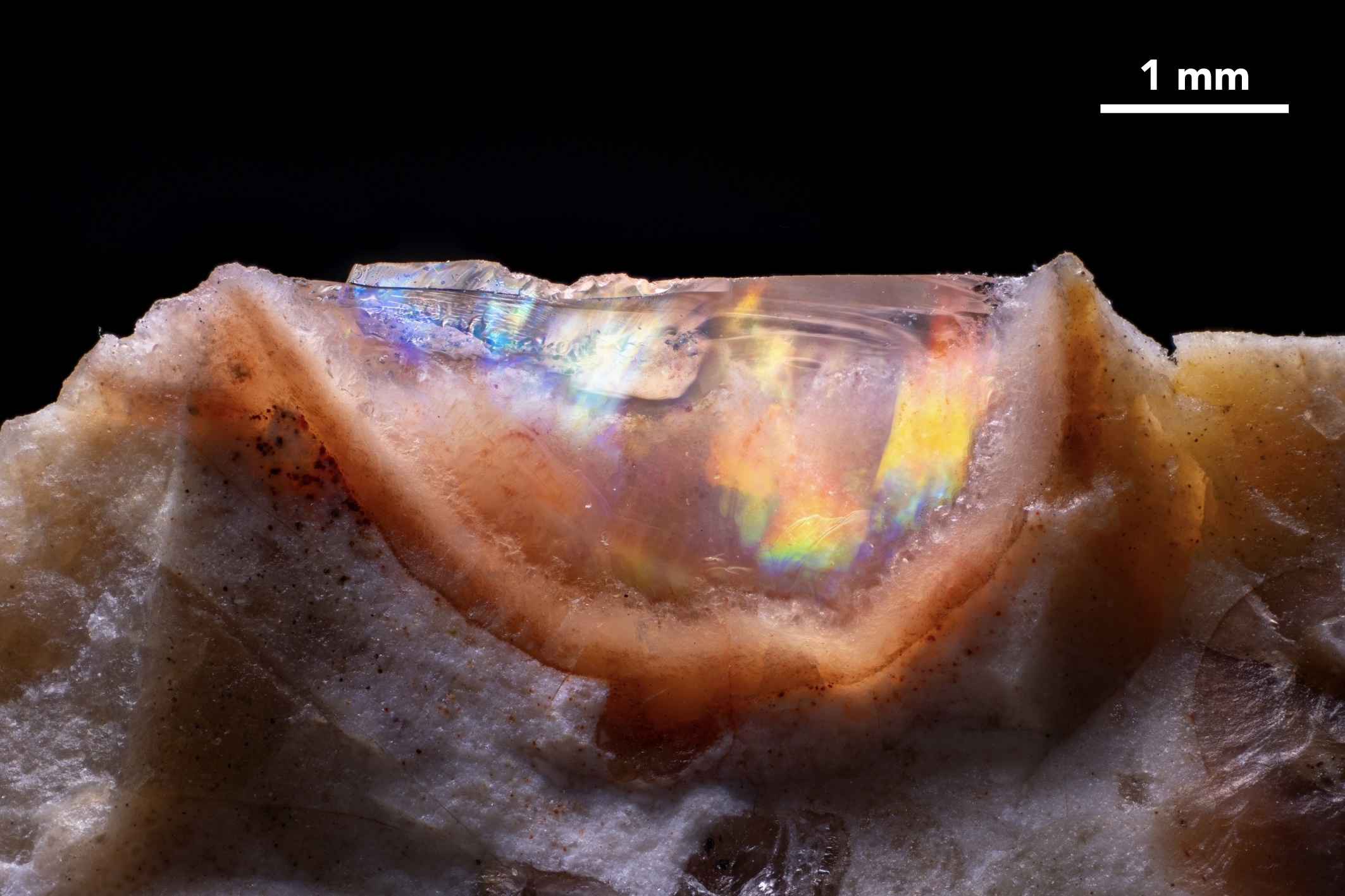
The fourth day was spent at the mineralogical museum in Miskolc and the Hosszú Hill locality near Monok in the Tokaj region, where we searched for precious and fire opal specimens, as well as hyalite.
The fifth day focused on the Rudabánya ore district, one of Central Europe’s most mineralogically complex polymetallic systems. We first visited the local mining museum before heading into the field, where we learned about the deposit and its many hydrothermal events. We collected many mineral species, including native copper, azurite, malachite, cerussite, chalcocite, galena, and many secondary arsenic-bearing minerals.
The final day included a visit to the altered zone of an epithermal deposit at Galambos Hill near Mád, where we collected alunite, scorodite, and bariopharmacosiderite. Lastly, we visited a perlite quarry and diatomite deposits in Erdőbénye, marking the end of the trip.
We are very thankful to SGA and the Faculty of Science, Charles University, for sponsoring this field trip, and we extend our gratitude to our member Dávid Szabó, who guided us at these localities.