Comments Off on A field-trip to the gold mining district in Jílové, Czech Republic
Václav Santolík
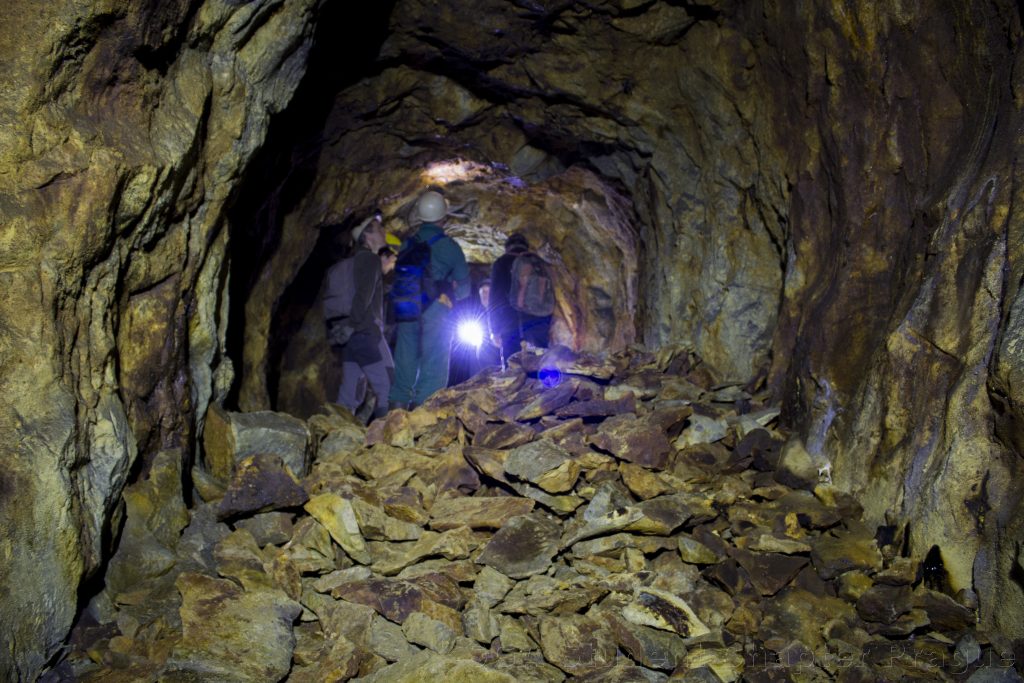
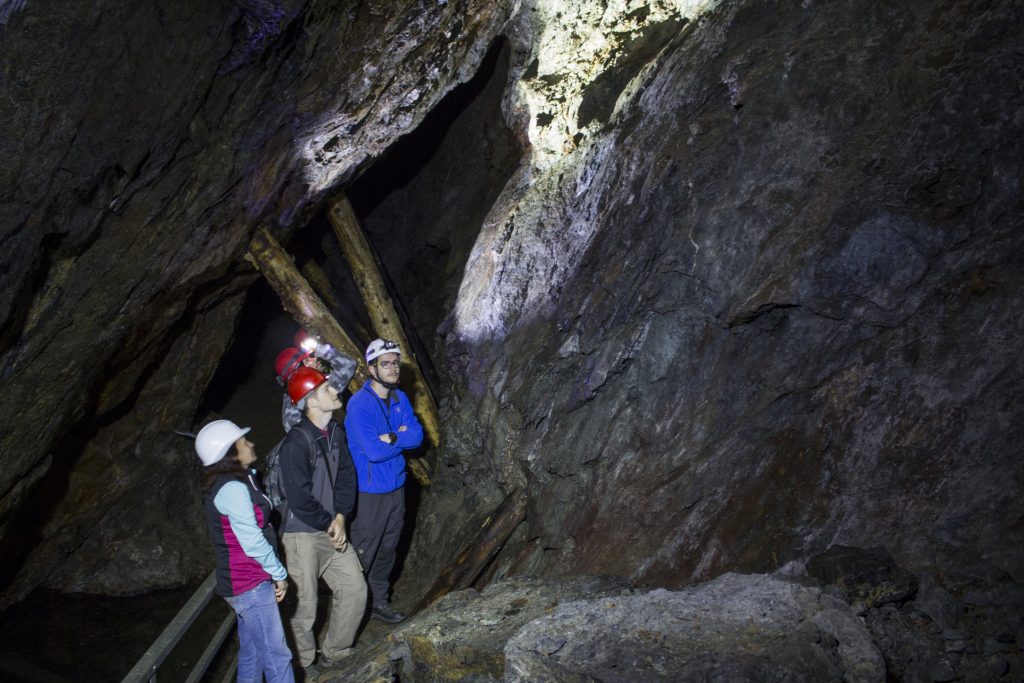
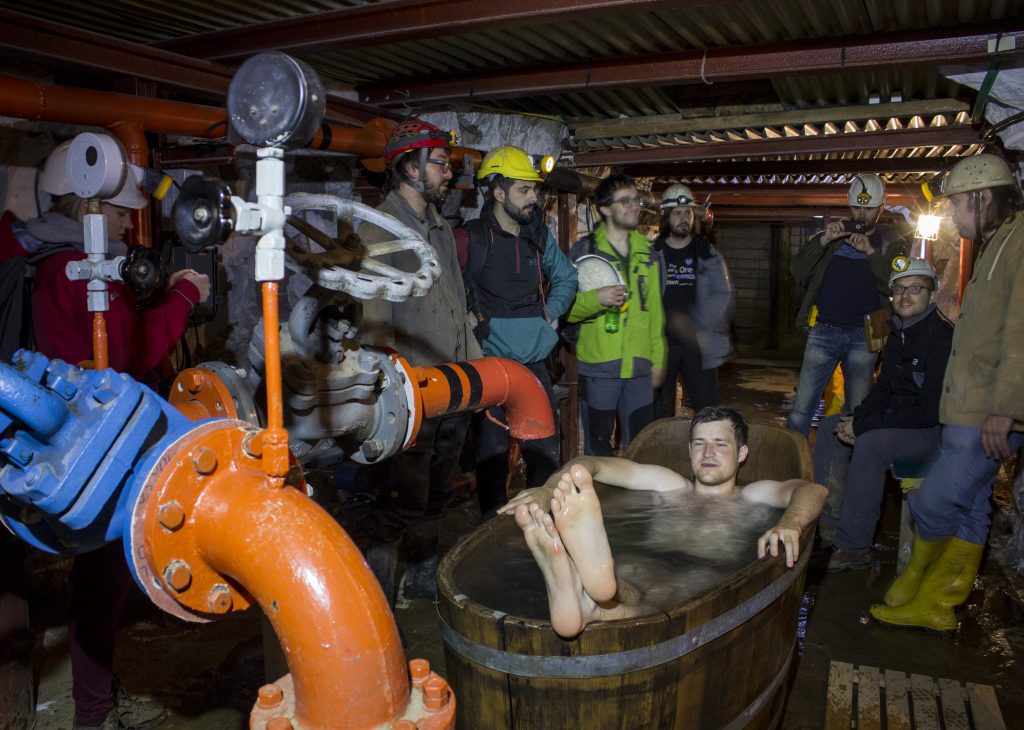
“Everything is functional here,” says Vladimír Pravda showing us his “office” 300 meters below ground, where we got by a minecart. He is a member of a group of enthusiasts that bought the dilapidated Jílové mines a few years ago. With his coworkers, he spends weekends on restoring the clogged stoles and abandoned machinery.
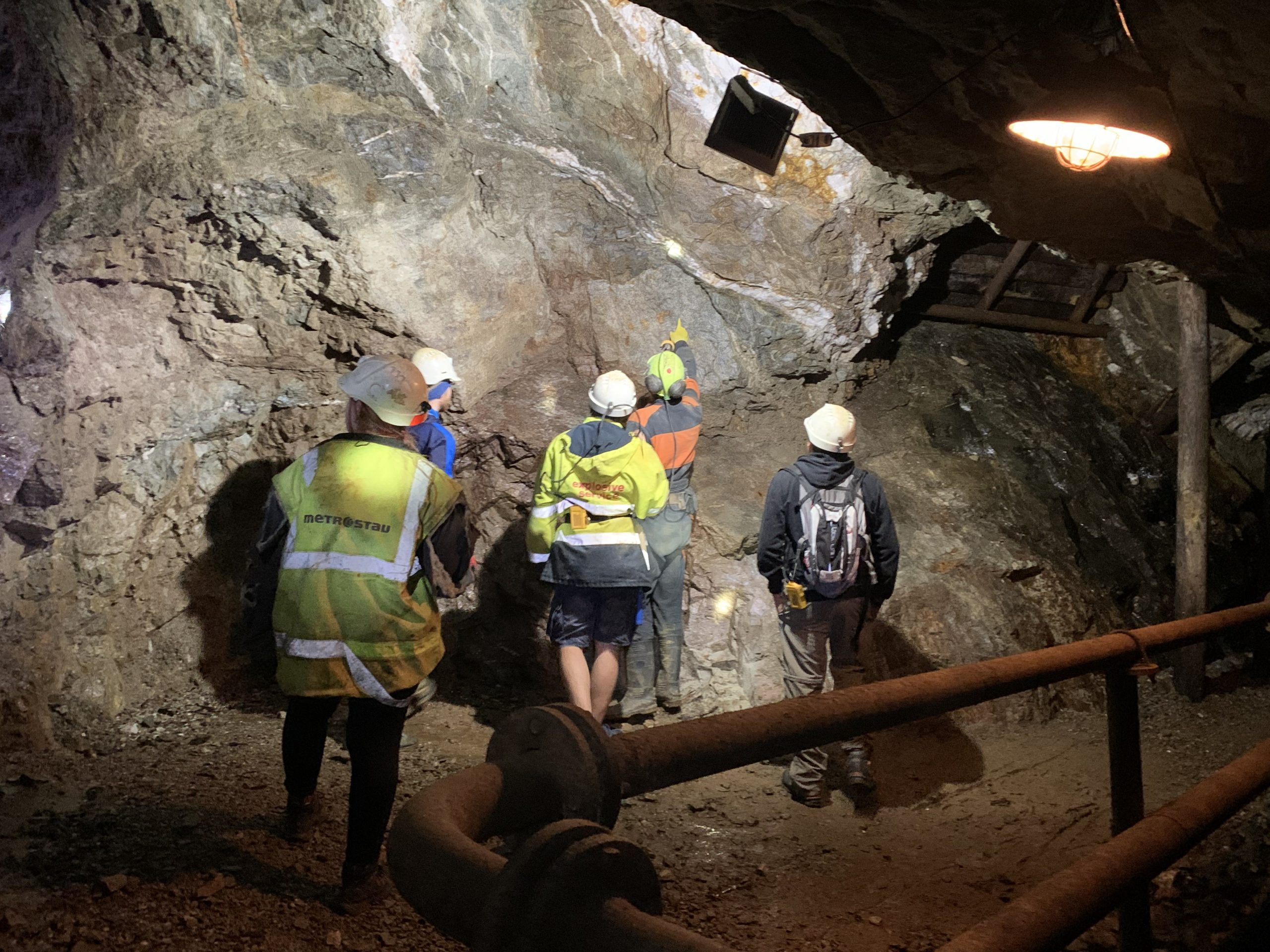
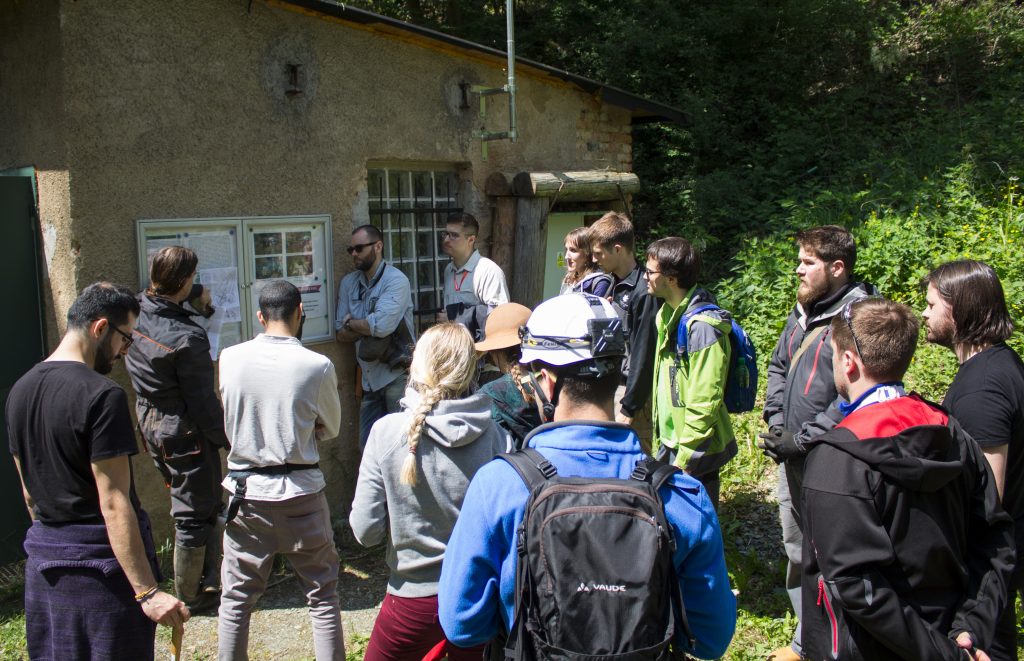
Fig. 1 – Observation of gold-bearing quartz veins in the Jílové Mine.
Gold mining has a long tradition in the Czech Republic. There are several historically famous mining districts like Jílové, Mokrsko, Kašperské Hory and Zlaté Hory. Unfortunately, all have been shut down during or shortly after the communist era. Currently exploration is proceeding at Zlaté Hory, however, the local socio-political situation does not favor any reopening of old mines.
The Jílové gold-bearing district was one of the most important areas of historical gold mining in Bohemia. The tradition of panning dates back to the period of Celtic settlement. In the 13th and 14th centuries, when gold was obtained mainly by deep mining with a total production of approximately 10 tons of gold, the Jílové district was probably the most profitable gold-bearing district in the Kingdom of Bohemia. Unfortunately, the mines with all documentation have been burnt during the husite wars in the 15th century. The profit from reopening in the 16th to 19th century and in the years 1938 – 1968 was not even close to that of the medieval times. Finally, the geological studies from the 1960s concluded that the mining would no longer be profitable.
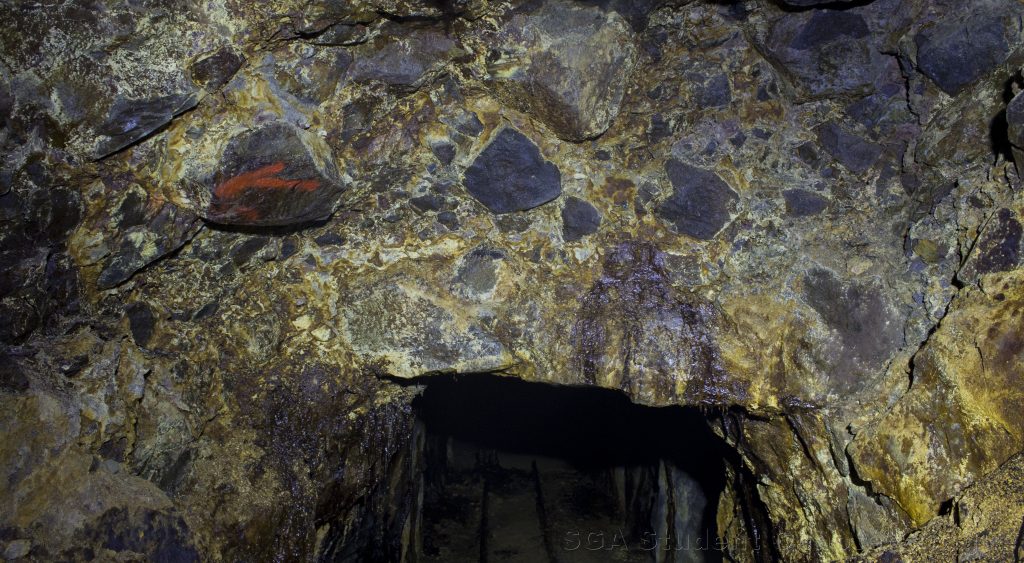
The fame of the Jílové district may have been based on the fact that gold was often found here in the form of coarse-grained aggregates and irregular sheets weighing up to several kilograms. The gold is present in quartz and quartz-carbonate veins, often accompanied by sulfides (pyrite, arsenopyrite, etc.), tellurium and bismuth minerals, scheelite, etc. Gold-bearing deposits usually have simple mineral composition, however, 51 minerals have been described from the Jílové district – many of them are rare, often detectable only during microscopic research.
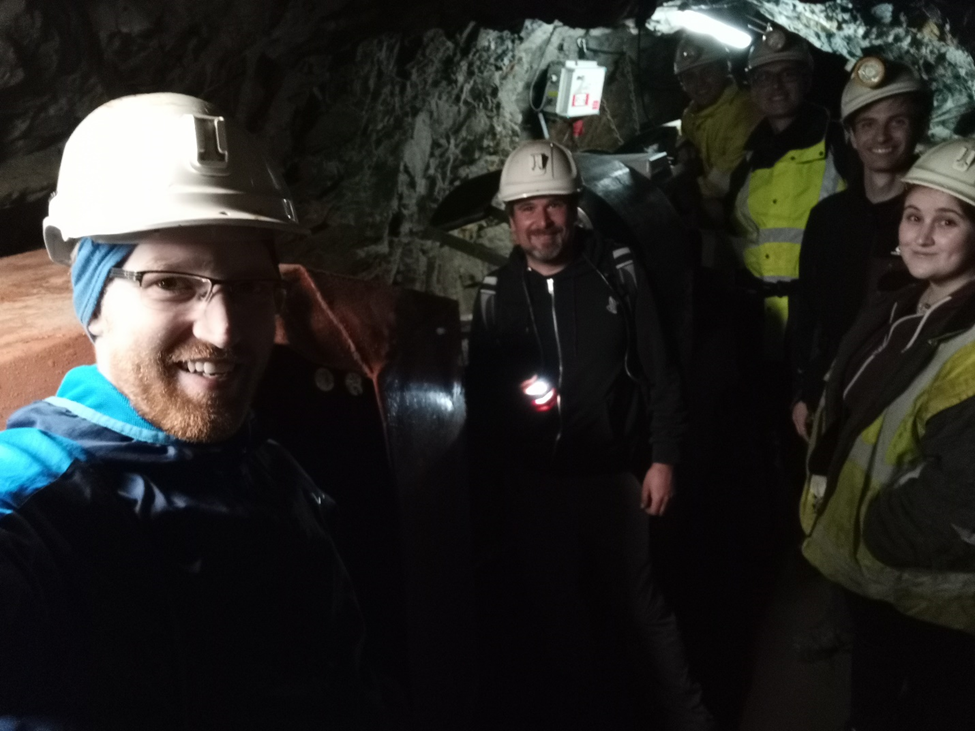
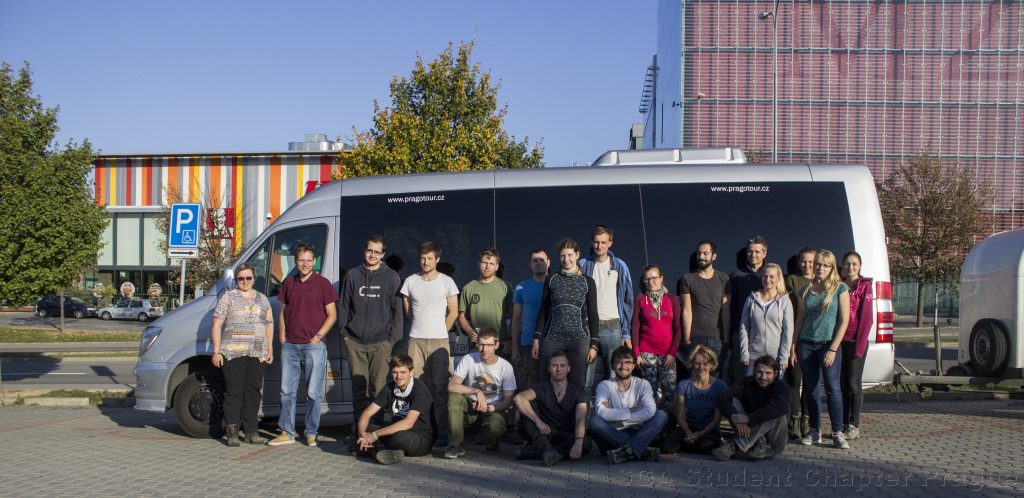
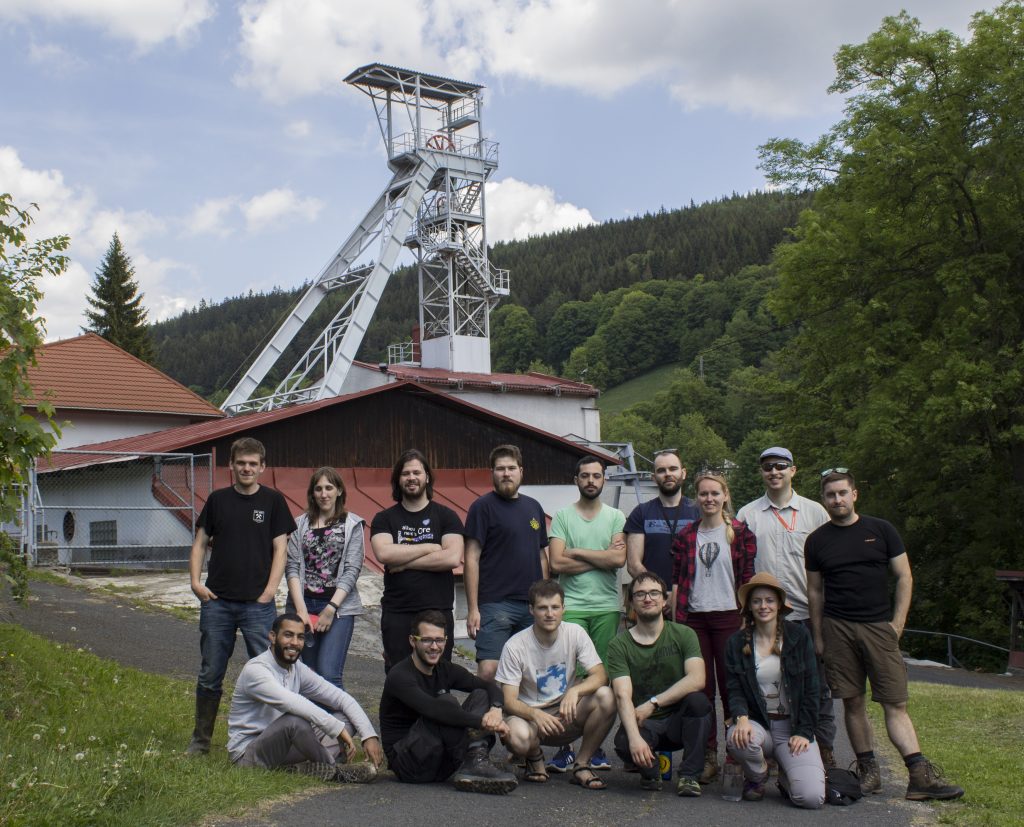
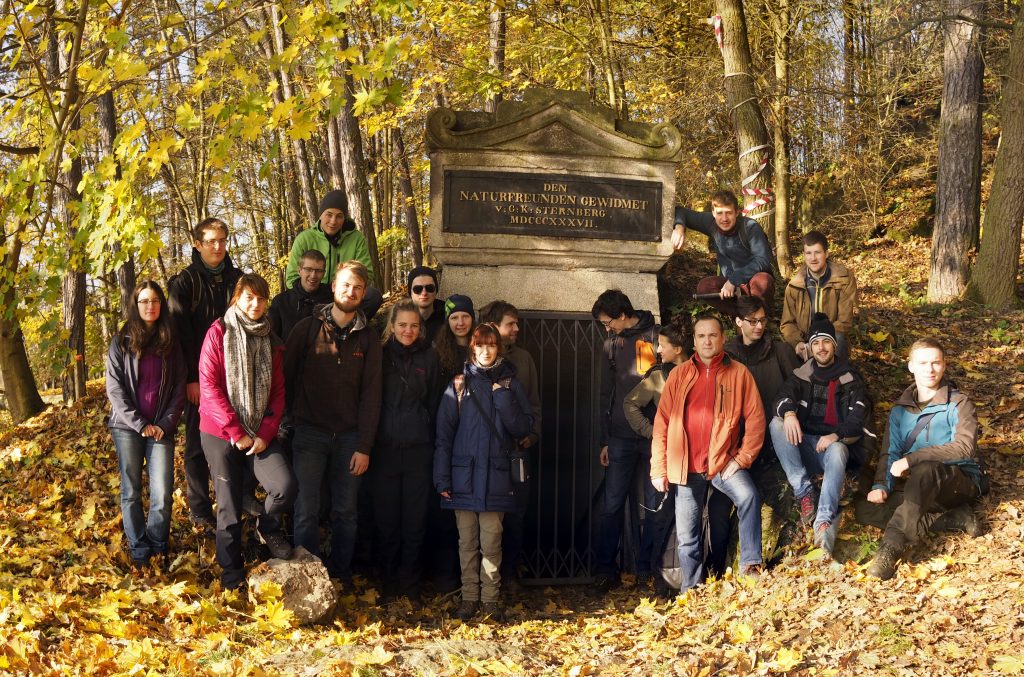
Fig. 2 – Happy visiters of Jílové Mine at the end of excursion.
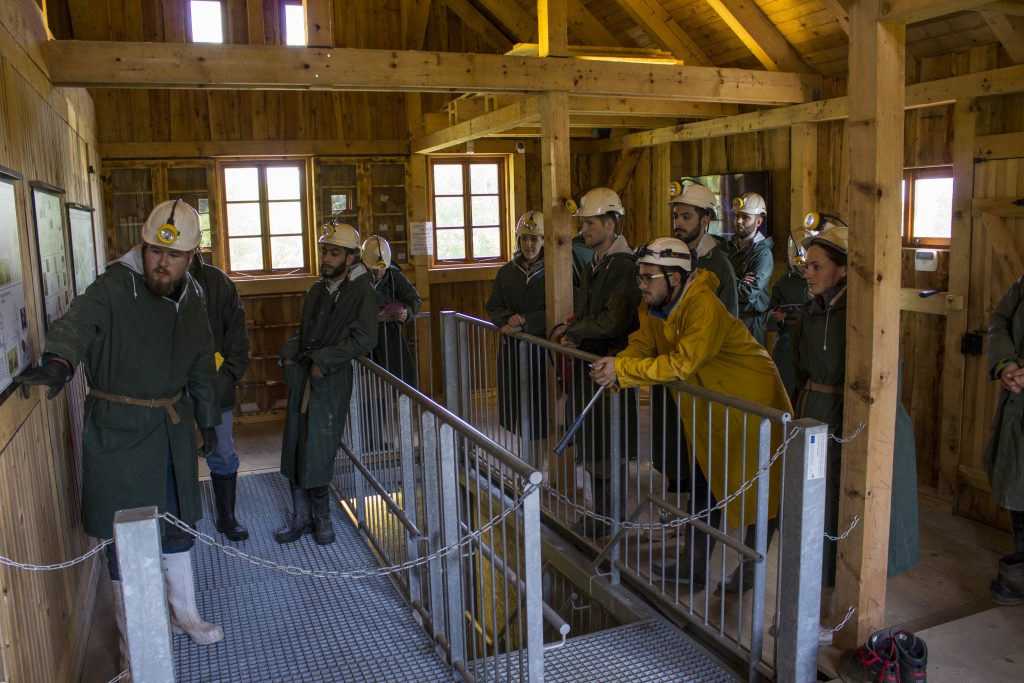
After several hours under ground, Vladimír wanted to provide us with some hands-on experience. “The country rock is very hard here, therefore, dynamite was used for digging the stoles. Here is a trigger that they used: you just need to spin the arm several times and push this button when it starts to blink,” he passes a small box to my friend. After my friend pushed the button, a staggering bang froze us. “I told you everything was functional here,” claimed Vladimír calmly. “This way, please. Before the smoke and dust reaches us.”
Comments Off on Fieldtrip report: Zlaté Hory deposits and history of mining
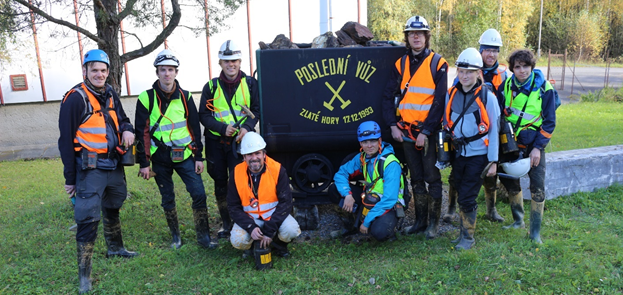
Fig. 1: Participants of the fieldtrip. Photo by V. Santolík.
At the end of October 2021, the SGA student chapter in Prague held a three-day autumn excursion focused on a mining district Zlaté Hory in Jeseníky mountains and its surroundings. The area is composed of Variscan metamorphic rocks like phyllite, micaschist, paragneiss, orthogneiss, amphibolite and limestone, which were formed from Cadomian (~570 Ma) to Variscan (~300 Ma) times. The polymetallic VHMS deposit occurs in metamorphosed Devonian formations and is currently a matter of exploration for possible gold mining.
1st day. History of Au, Fe and Mo mining in the Zlaté Hory region.
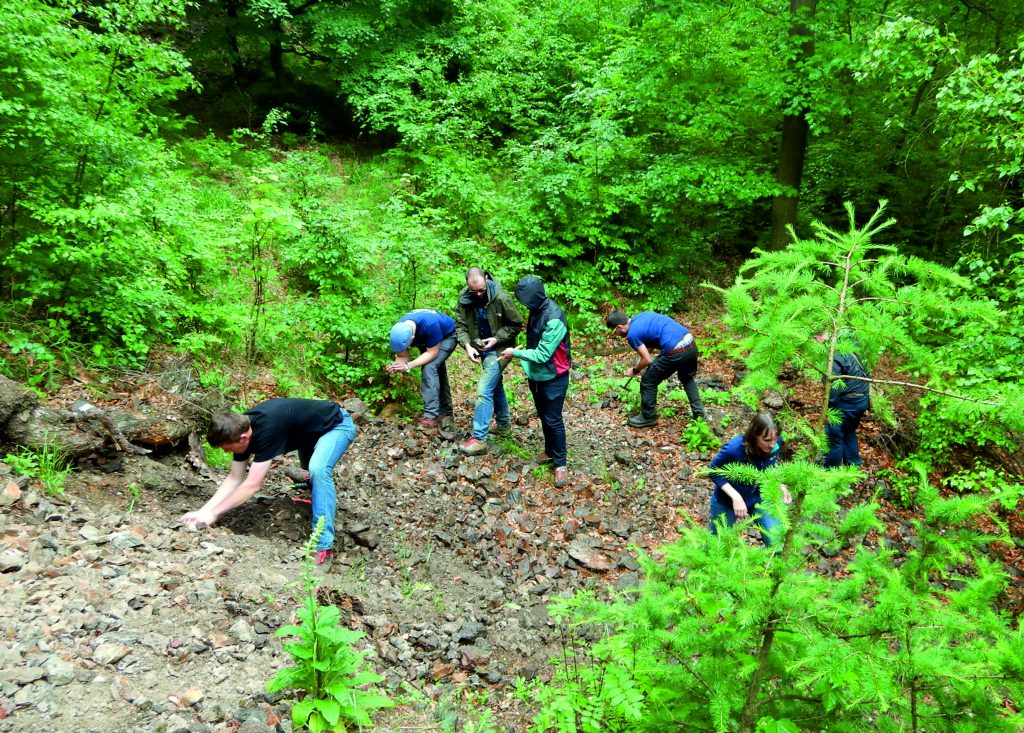
The first day was focused on surface signs of previous mining and was lead by Dr. Josef Večeřa. These are dominated by placer mining marks like pits, hollows and canals as well as underground mining marks like pits and adits. The researchers were able to define three stages of mining based on different mining techniques – medieval, modern and 19th century. Interestingly, the different stages are commonly seen at a single locality. For example, in Hláska forest near Ludvíkov village, there are several pits following a single ore bearing structure and depending on the distance between particular pits, it can be inferred, whether they correspond to the medieval or modern period. Consequently, we visited a locality near Vidly village where we found several minerals related to iron ore which was mined until 18th century, including magnetite, hematite, specularite and jasper.
2nd day. Minerals collecting in mine Zlaté Hory – west; “Blue drift”.
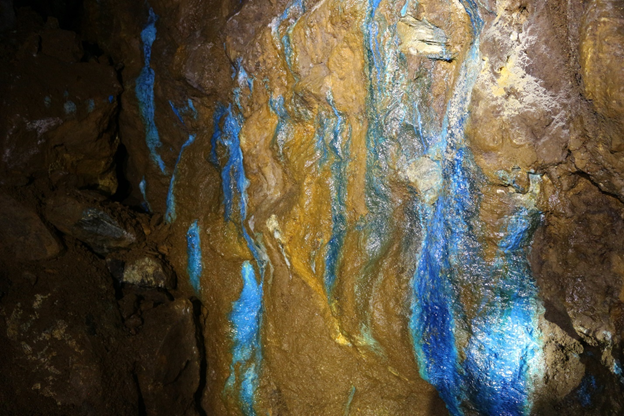
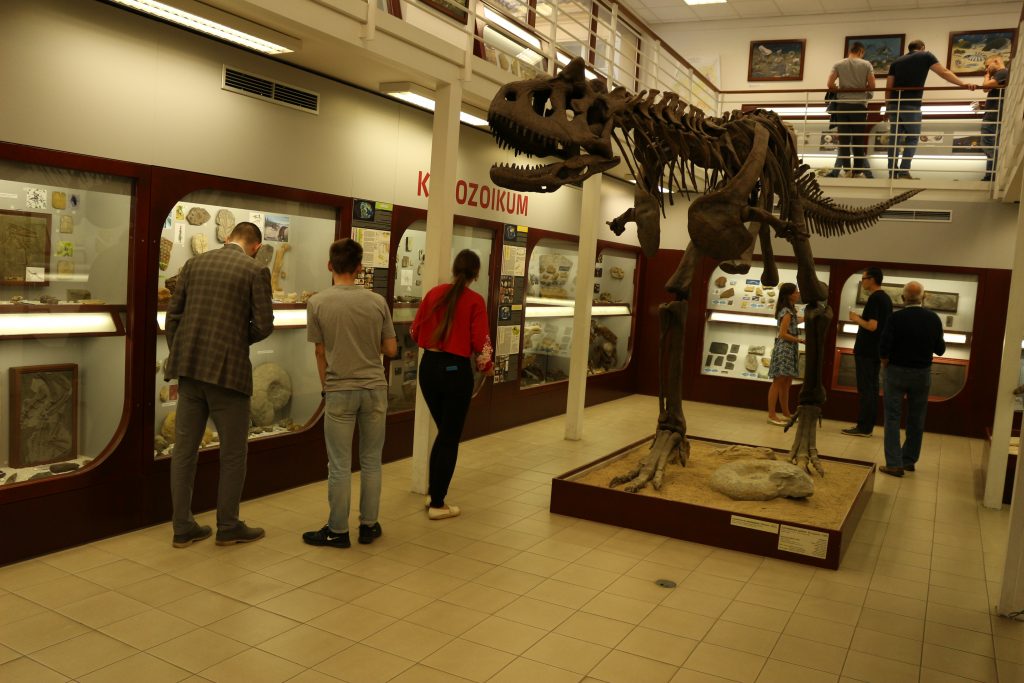
On the second day, we went down into the Zlaté Hory – west mine, where the current exploration takes place. The walk to the end of the drift was nearly 4 km long, unfortunately the oxygen level detector did not allow us to stay there for a longer time and search for minerals. However, during the 4-kilometer walk we still managed to find several appealing minerals, for instance pyrite, galena, sphalerite, cerussite and copper. On the way back, we entered the “Blue Drift”, which is called blue for the intriguing blue colored allophane covering the walls. After a few hours in the mine, we visited local museum with a nice exposition of minerals and rocks found in the area.
Fig. 2: Azure blue allophane covering walls in the “Blue Drift”. Photo by V. Santolík.
3rd day. History of mining – open-air museum.
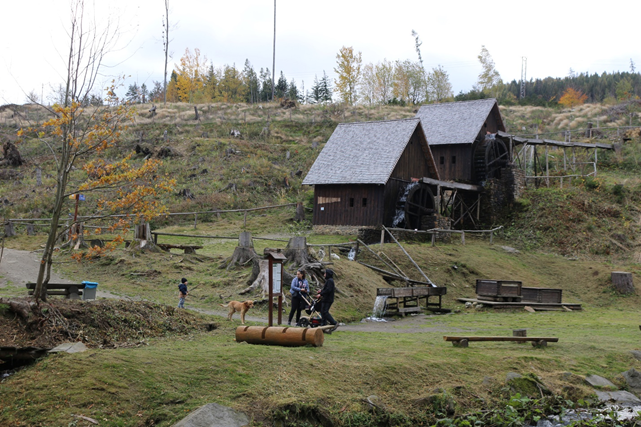
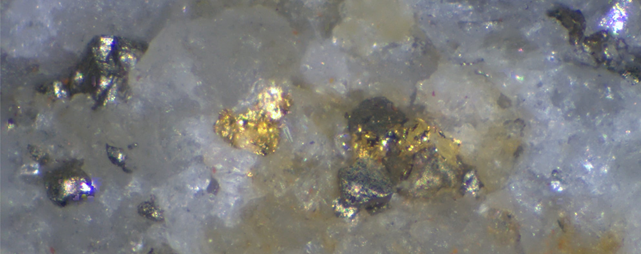
On the third day morning, we visited an outdoor museum dedicated to old miners and old mining techniques. We learned about their lifestyle and tools they used for daily life as well as the methods and equipment applied for gold obtainment. At the end, we were encouraged to find some gold with a gold washing pan in the arranged containers with sand and water. The most adventurous of us could not resist despite the freezing water and managed to find a few gold grains. Finally, with minds full of new experience and bags full of new minerals, we returned back home.
Fig. 3: Gold mining open-air museum in Zlaté Hory. Photo by V. Santolík.Fig. 4: Collected quartz sample with a native gold. The biggest gold has a size of 200 µm. Photo by M. Tuhý.
Děkujeme IGCP 682 – MINE TAILING REVALORIZATION (Duration: 2019-2021) za finanční podporu, která přispěla k organizaci této exkurze / We thank IGCP 682 – MINE TAILING REVALORIZATION (Duration: 2019-2021) for its financial support, which helped to organise this excursion.
Štěpán Jaroměřský; Karolína Fizková; Jan Šulc; Štěpán Dvořák; Marek Tuhý
Faculty of Science, Charles University, 128 43 Praha 2, Czech Republic; Corresponding author E-mail address: jaromers@natur.cuni.cz
Fig. 1: Ongoing lecture; Photo by Štěpán Jaroměřský
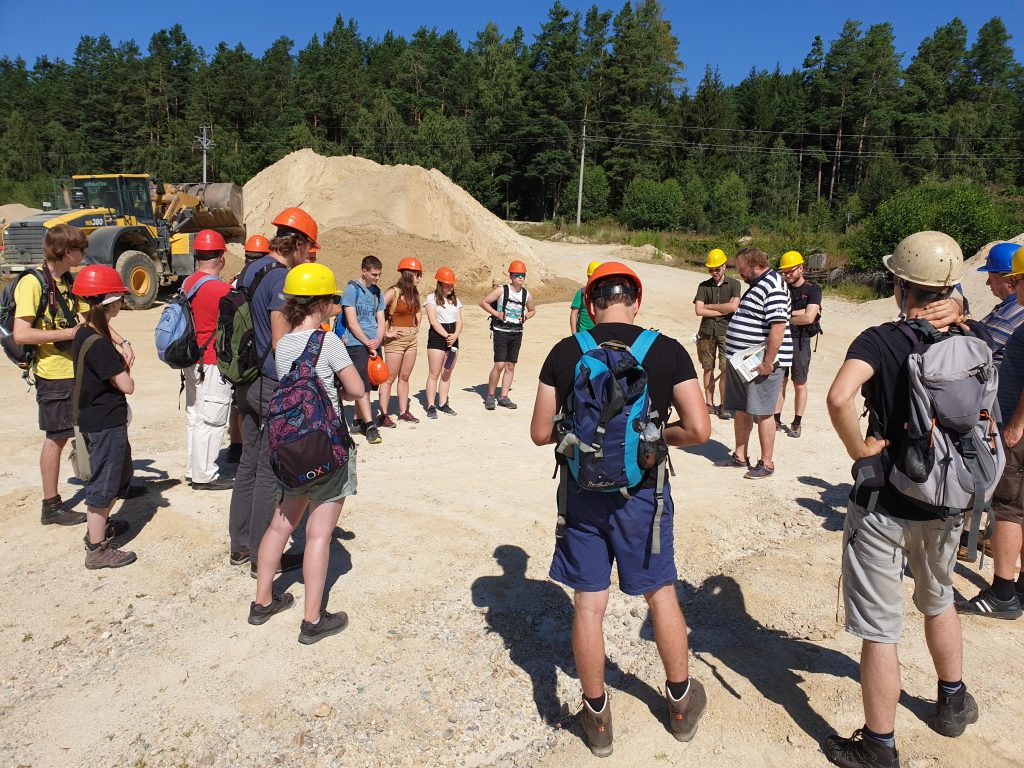
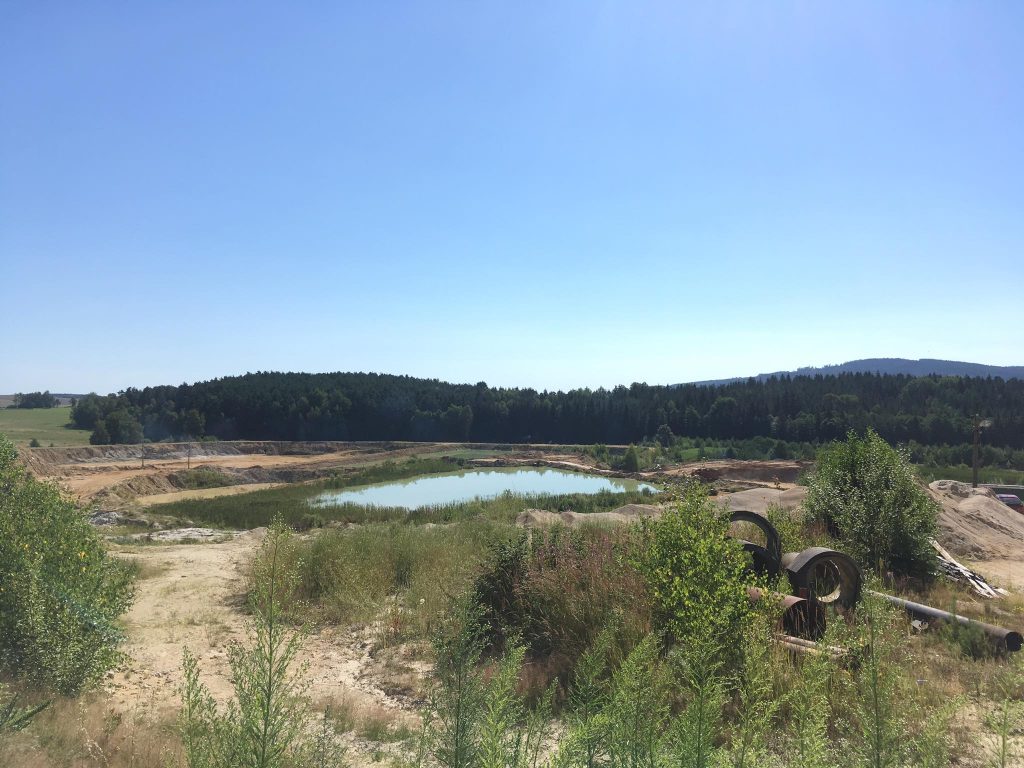
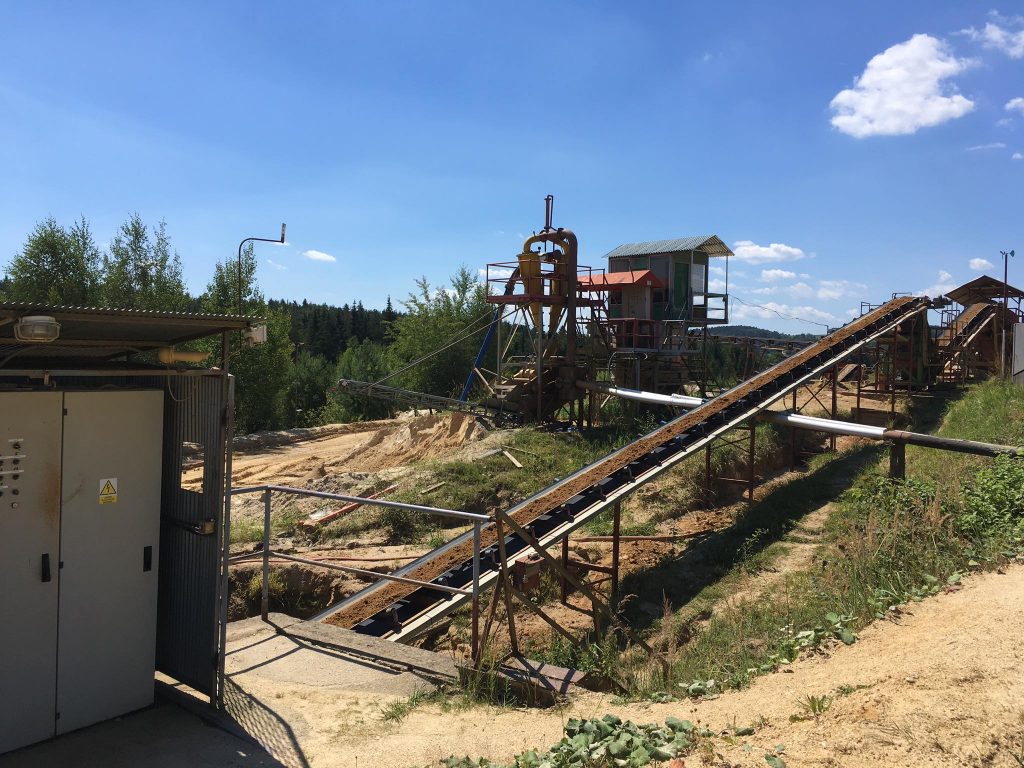
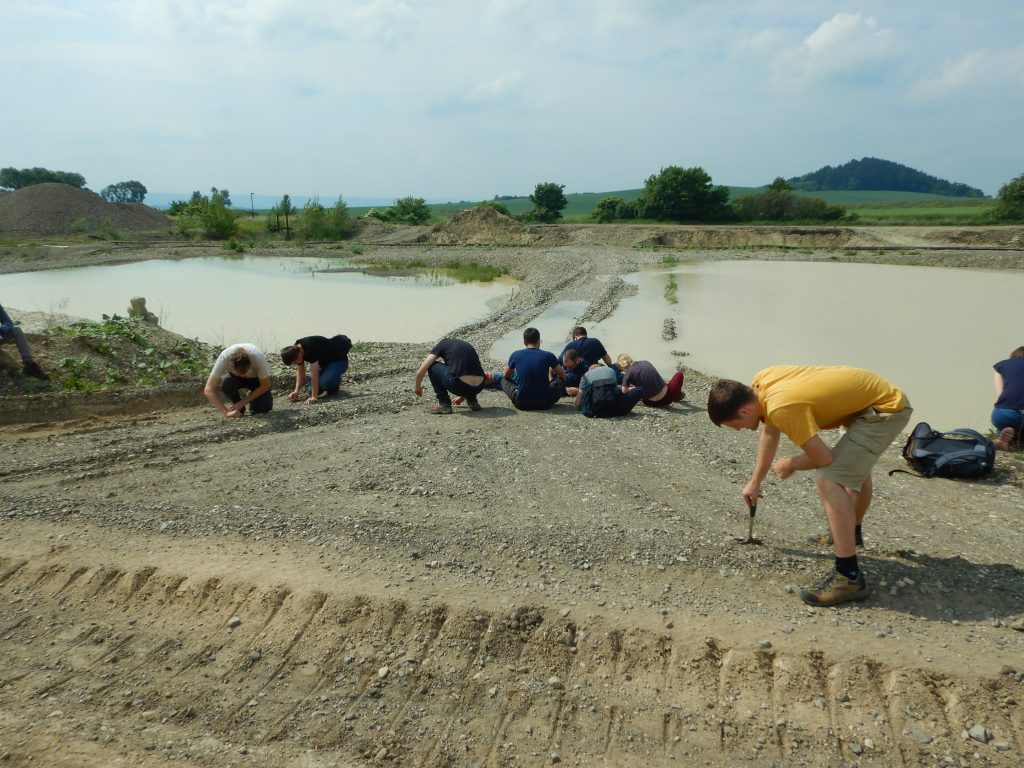
On 30th July was organized, despite some restrictions caused by the pandemic, excursion to South Bohemia. 15 Chapter members took part in this 1-day excursion. The expert interpretation was led by Mgr. Miloš Faltus, Ph.D. (Fig. 1). The aim of the excursion was to introduce the participants to the Czech rarity in the form of tectite called Moldavite. As one of the few people we were given the opportunity to look into the sand pit (Fig. 2), which is located between the village of Chlum and Ločenice. This sand pit is mainly used for sand mining, but its secondary product are the Moldavites (Fig. 3). It is the only company in the Czech Republic that has permission to officially mine and then sell Moldavites
Fig. 2: View of the sandpit; Photo by Jan ŠulcFig. 3: Active treatment plant; Photo by Jan Šulc
The first discovery of Moldavites was in 1787 by Dr. Josef Mayer from Charles University. He had thought of them as glass of volcanic origin. They were named after the Vltava River, around which the first findings were located. Later, the concept of Moldavite was introduced from German Moldau (Vltava). As similar glasses were later found more widely around the world, the common international name of tectite (from Greek tectose – fused) was also used for them. Generally they are vitreous bodies, which usually have dimensions of several centimeters and a weight of several units up to tens of grams. Tectites can be found all over the world, but Czech Moldavites, unlike others, have a transparent light or dark green colour.
Today, the most likely and widely accepted theory of the formation of Moldavites is considered to be the impact of a meteorite on the surface of the Earth some 14.5 million years ago. This impact occurred in the area of today’s so-called The Ries crater between Norimberk, Stuttgart and Munich. Today in the centre of this crater lies the city of Nördlingen. The Ries crater is 24 km in diameter. The meteorite impact occurred at a speed of about 20 km/s, at an impact angle of 30-50 °. During the collision with the Earth, a huge amount of energy was transferred, resulting in the crushing, melting and evaporation of rocks at the point of impact as well as a separate cosmic body. There was a cloud containing gaseous, liquid and solid phases, the main part of which was directed to the East. When the initial high temperature and pressure dropped, the silicate melt solidified so quickly that the individual mineral components did not fully crystallize to form silicate glass. This was particularly the case in the area of southern Bohemia and southern Moravia in the vicinity of Trebic. The range of the vltavins from Ries crater to southern Bohemia and southern Moravia was 200-450 km. It is estimated that the total weight of all fallen vltavins would be about 3000 tonnes.
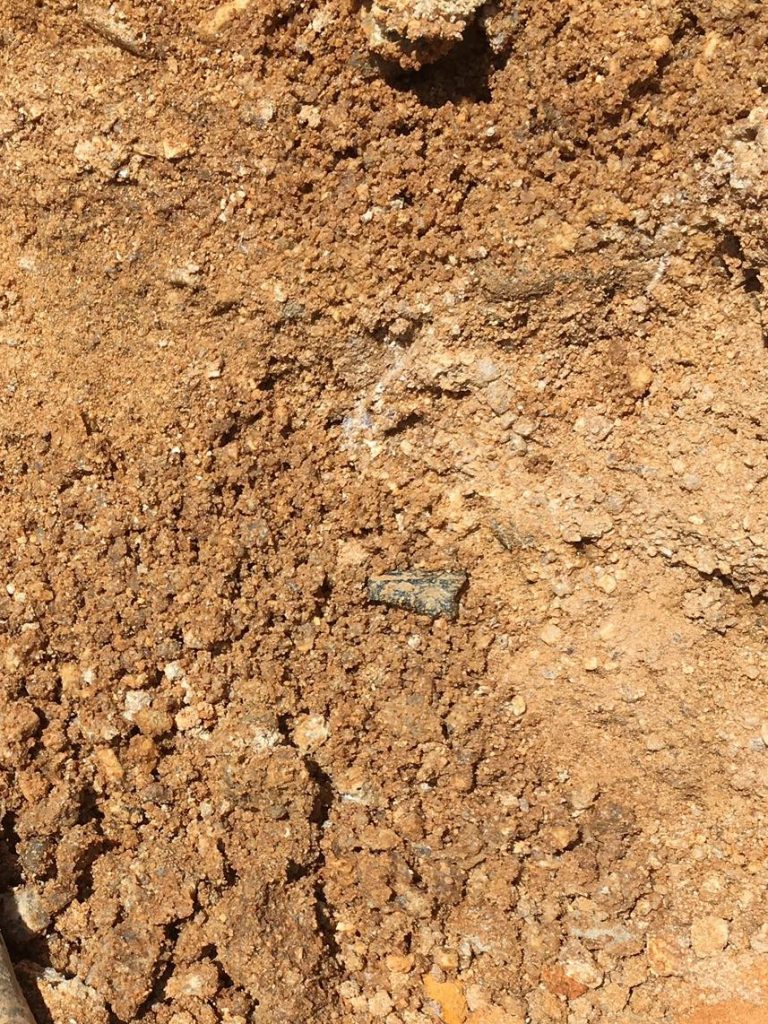
Fig. 4: Currently found moldavite; Photo by Jan Šulc
South Bohemian Moldavite is characterised by its light – dark green colour. This is different from the Moravian ones, which tend to be in brown colours. Very rarely was also discovered bicolor moldavites, probably due to the combination of two distinct moltens before impact. Chemically, it is silicate glass, except for SiO2, which is 70-80 % represented in moltens, we can find Al2O3 in the composition. MgO, CaO or Fe oxides. The hardness varies between 6 and 7 of Mohs scale
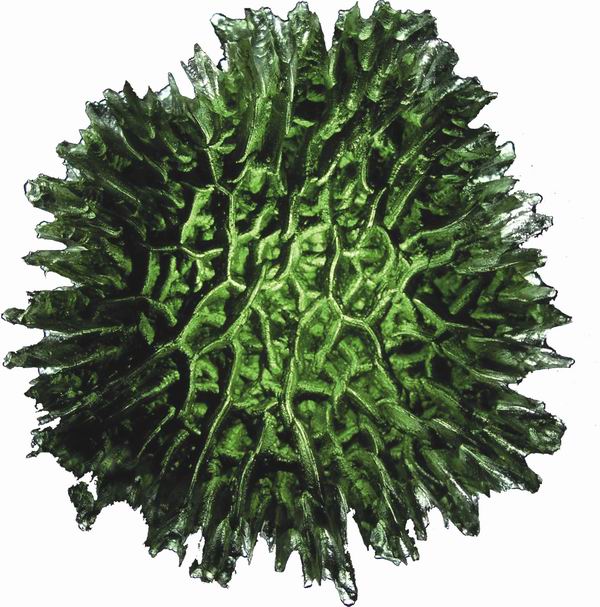
Macroscopically, they have a very peculiar appearance and they are mostly in the shape of balls, sticks, droplets, also rarely for heart or hedgehog shapes (Fig. 5). A great interest is the sculpture, which occurs mainly on the Moldavites from southern Bohemia. This is the name of the surface of the individual samples, which has been disturbed by the acids contained in the soils. These acids then stick to the surface of the Moldavite over time, resulting in a certain wrinkling of the surface, which is quite valued. Moldavites also contain a number of inclusions, which take the form of closed-gas bubbles. Because the Moldavite is chemically very close to the glass, it is sometimes difficult to distinguish the cutted Moldavite from the cutted green glass.
Fig. 5: Rare hedgehog Moldavite form; Taken over: http://observatory.cz/static/vystavy/vltaviny/4-vltaviny.php
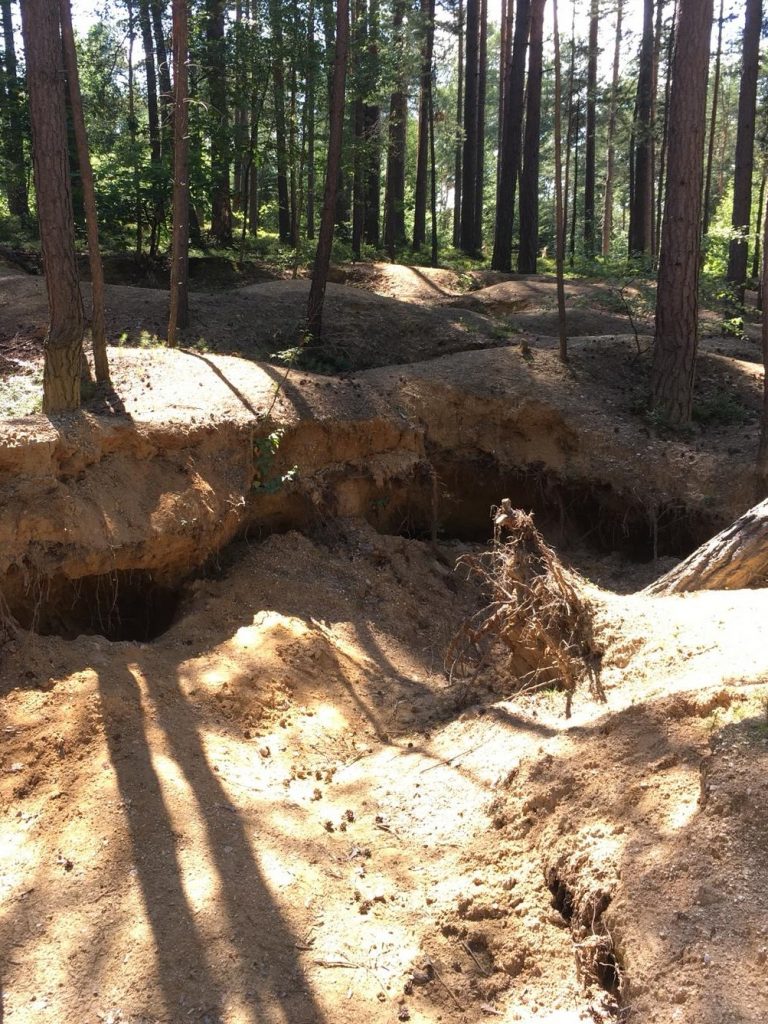
The sand pit, which we visited as part of our excursion, belongs geologically to the South Bohemian basins, where sedimentation began during the Cretaceous period and continued until the Tertiary. The basins are composed primarily of fluvial and lake sediments. In the visited sand pit we find Moldavites in the Domanín formation, in the Korosec series, in sands to gravel with clay inserts. Moldavites are a rare mineral, and a lot of people want them to make money. In most cases, they dig even a few meters deep pits (Fig. 6) to get into the layers that contain the Moldavites. Unfortunately, this intervention often destroys nature, natural root systems and endangers animal safety. This problem has been solved for several years and is likely to be solved by extracting all layers with Moldavite findings (except fields) followed by rehabilitation to the original natural conditions.
Fig. 6: Consequences of illegal mining; Photo by Jan Šulc
The whole excursion was a great success and we would like to thank the owner of the sand pit Ing. Viktor Weiss, who allowed us to enter the normally inaccessible area. We would also like to thank Mgr. Miloš Faltus, Ph.D., who gave us a professional lecture and last but not least, we would like to thank the entire SGA for our long-standing support and favor
Baier, J. (2009). Zur Herkunft und Bedeutung der Ries-Auswurfprodukte für den Impakt-Mechanismus. Jahresberichte und Mitteilungen des Oberrheinischen Geologischen Vereins, 9-29.
Baier, J. (2007). Die Auswurfprodukte des Ries-Impakts, Deutschland. Verlag Documenta Naturae.
Vand, V. (2009). O původu tektitů a vltavínů. Pokroky matematiky, fyziky a astronomie, 54(1), 23-32.
Řanda, Z., Mizera, J., Frána, J., & Kučera, J. (2008). Geochemical characterization of moldavites from a new locality, the Cheb Basin, Czech Republic. Meteoritics & Planetary Science, 43(3), 461-477.
Skála, R., Strnad, L., McCammon, C., & Čada, M. (2009). Moldavites from the Cheb Basin, Czech Republic. Geochimica et Cosmochimica Acta, 73(4), 1145-1179.
Comments Off on Prague SGA Student Chapter visiting Columbia-Bogotá SGA Student Chapter: Mineral deposits of Columbia
Štěpán
Jaroměřský, Ivan Mateo Espinel Pachón, Jan Hofmann, Milton A.
Santos
1SGA
Student Chapter Prague, Faculty of Science, Charles University,
Albertov 6, 128 43 Prague 2, Czech Republic; jaromers@natur.cuni.cz
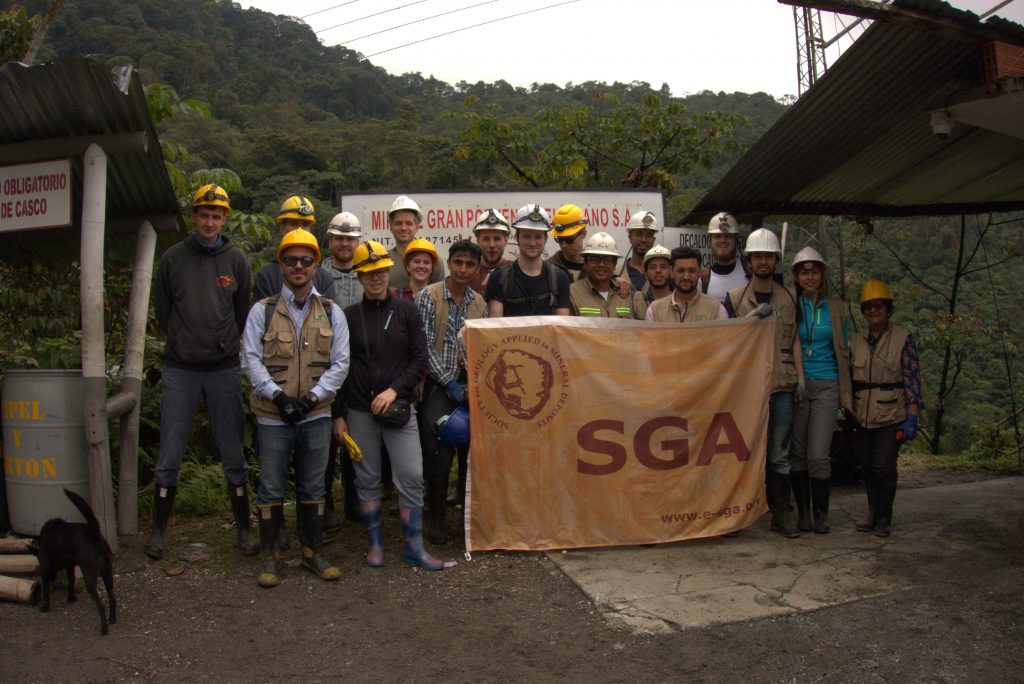
Photo of the whole group of participating members
As
every year, Prague Chapter participates in several fieldtrips with
friendly chapters. This year, we managed to negotiate several daily
fieldtrips with the SGA Student Chapter Columbia-Bogotá, which
should have focused on emerald and gold deposits. The main target was
to visit the world famous emerald deposit near the town of Muzo.
However, the whole program was charged and very well prepared by the
Colombia-Bogotá Chapter. The Prague chapter was represented by 10
members and the field trip lasted from March 19 to 25.
1st
day:
On
the first day we visited a sedimentary-exhaliative deposit (SedEx)
near Chiquinquirá – Boyaca. Sedex are ore deposits formed by a
release of ore-bearing hydrothermal fluids. Subsequently, they must
be released into a water reservoir, resulting in the precipitation of
stratiform ore. SedEx deposits are the most important sources of
lead, zinc and barite. These ores are processed for tungsten, copper,
silver, gold and bismuth.
This deposit is located high in the mountains of northern side of central Colombia. 10-year-old exploration galleries designated for researching copper in the past surround the site. There are abundantly chalky sediments, in which there are minerals of copper such as chalcopyrite. We also found some beautiful examples of barite crystals. It is a fairly extensive site, but because of the steep slope and dense fog, we stayed on the upper parts of this deposit. It was a nice introduction to Colombian geology and nature.
2nd
day:
On
the second day, our emerald trip started in Las Pavas area. We had
accommodation in the town of Muzo, from where a very narrow path led
through the local mountains. Muzo itself is well known for its
emerald deposits.
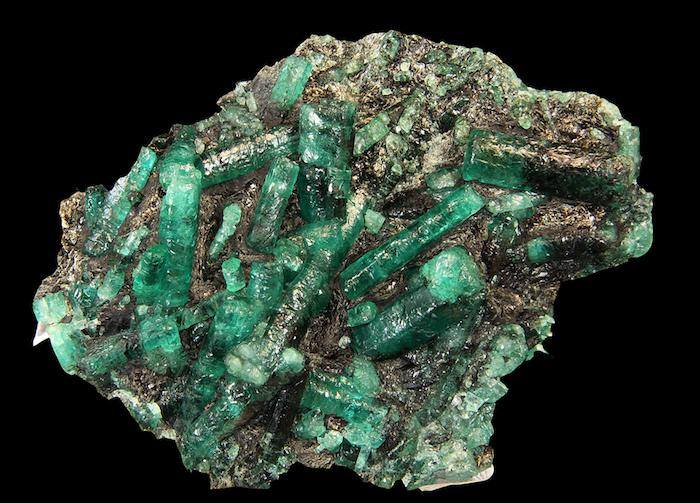
Emeralds
are usually found in calcite-dolomitic veins containing pyrite,
ankerite, albite and quartz. These veins are the product of
hydro-thermal fluids that disrupt the rock massif and the
interactions of the metasomatic fluid with subsequent deposition in
the breaks formed by these calcite-dolomitic veins. It is likely that
metasomatic fluids come from shale formations near Muzo, which are
probably the source of vanadium, which is the cause of the unique
color of local emeralds.
Firstly,
we headed to the Rio Magdalena where we could find some samples in
the river or meander scrolls. Only one member of our chapter was
lucky enough to find a small sample in the shale. We even
investigated one closed mine which might be reopened in the near
future.
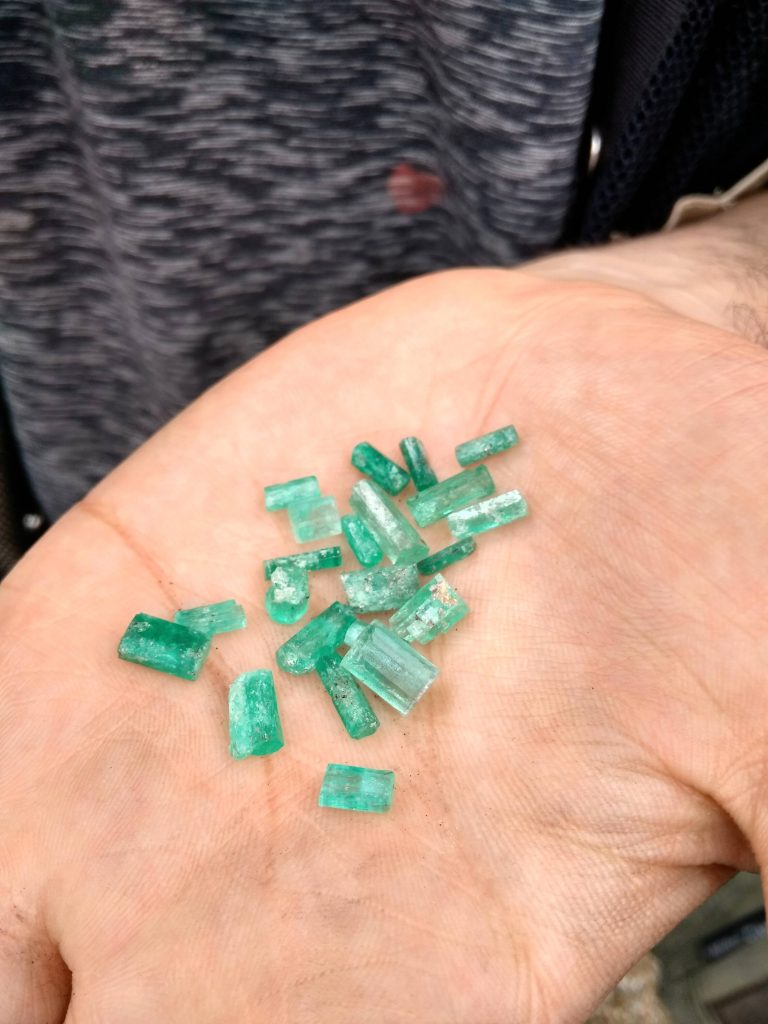
Fine emeralds crystals from Muzo. Photo by E. Vrňatová
3rd
day:
On
the third day, we had a scheduled visit to El Líbano Tolima, the El
Porvenir gold mine, orogenic and epithermal gold deposit. This mine
is processing sulphide ores like pyrit, containing relatively large
amounts of gold (up to 1000 ppm). The grains of gold in the bearing
are mainly included in sulphides and silicates. The mineralization of
gold in the bearing is probably caused by the penetration of
porphyres into the Paleozoic slate on the eastern wing of Colombian
Andes. It is believed that the mineralization of gold occurred in
three early phases of intrusion, which are accompanied by a number of
sodo-calcical changes and the late phase of penetration of porphyres.
The samples contained high quartz and chalcopyrite content.
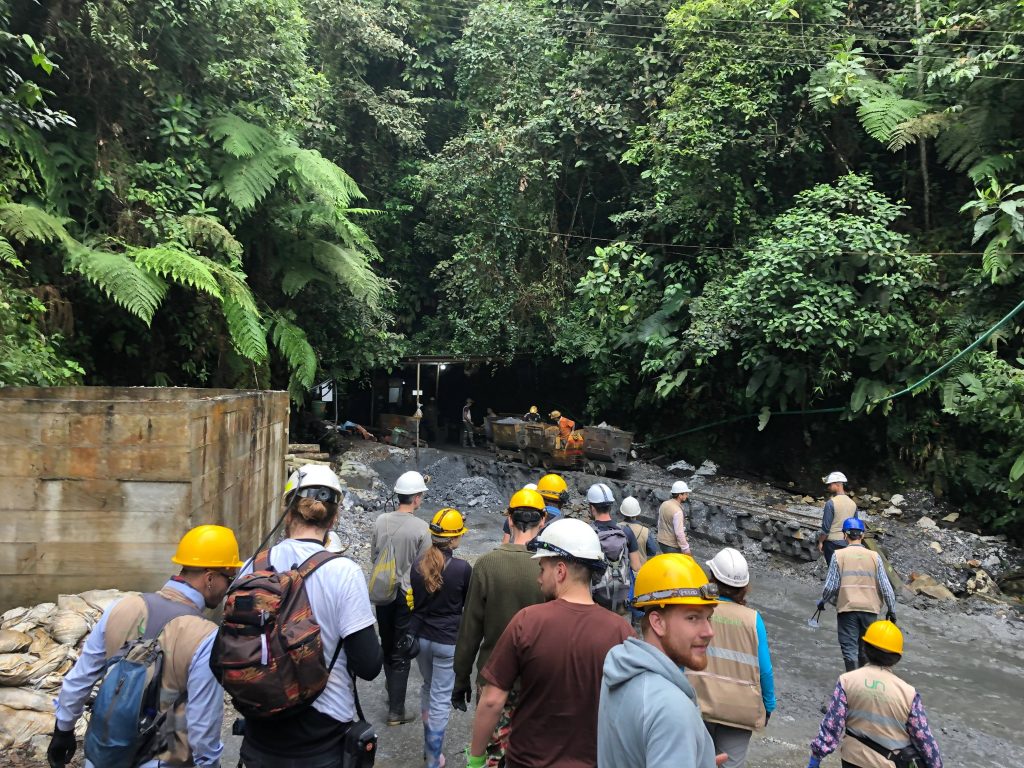
We
travelled to the mine a long way on a car’s hull. Then we went
through the inspection, which was waiting for us in front of mine.
The whole mine is active and so we could only be there in the pause
period. The whole visit was fantastic and very engaging. At the end,
everyone could take only one sample of the size of a fist.
One of the eight entrace to the El Porvenir gold mine
4th
day:
On
the fourth day, we visited the Cu-skarn Payandé deposit with
garnets.
The
post-Triasic plutonic rocks, known as the Payande Stock, grow on the
eastern edge of Colombian central Cordillery near San Luis-Tolima.
The quarry could not be reached directly by our bus, so we had to
stretched our legs. At least we were accompanied by a car that eased
us from our backpacks and hammers. The road was not difficult, except
from the ford across the river, where we had to take off our shoes
and wade.
The reason why we drove there were skarn outcrops, where the great and beautiful crystals of andradite are located. Regarding the other minerals, hematite, azurite, quartz, calcite, chlorite, magnetite and sphalerite are also found here. Petrology and mineralogy is very interesting in this deposit, as there are signs of a passage of hydrothermal fluids and changing contacts with individual minerals. We saw the beautiful mineralization of the copper. There are also several zones to see. The first zone corresponds to the tonalites, the second to endoskarns and the third to exoskarns. There is also a prograde zone containing garnets and pyroxenes. In the retrograde zone, where iron oxides, iron sulphates and copper are found. This was our last locality in terrain.
5th
day:
On
the fifth day we were back in Bogóta and we had a planned tour of
the geological section at the Universidad Nacional de Colombia. We
went through some local classrooms and looked at a few samples from
the local collections. We also examined a few rocks which we saw
during the fieldtrip under a microscope and finally we listened to
short presentations from Prague Chapter and Bogota Chapter. After
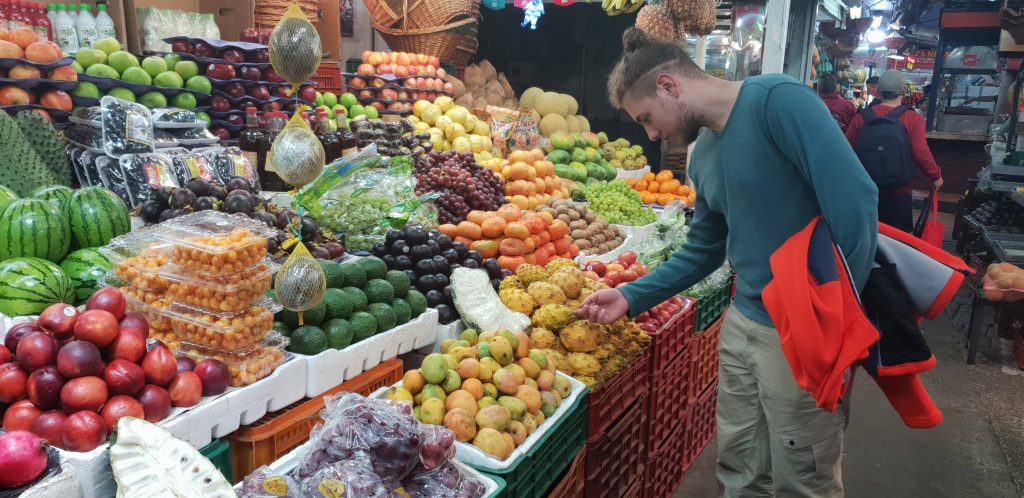
exploring the area, we went to the city to taste a bit of all
possible and impossible fruits on the world-famous market Plaza de
Paloquemao. Then we moved to the Gold Museum in Bogota and the
largest Emerald museum in the world. Unfortunately, this day the
Emerald Museum was closed in, so we had to visited another day.
Finally,
we would like to thank all the leaders of this fieldtrip, especially
Ivan Mateo Espinel Pachón and all the SGA Student Chapter
Columbia-Bogotá members for an amazing organization and for ensuring
everything needed for the success of fieldtrip. In general, I think
that the cooperation between Chapters is the best form of studying.
Also I would like to express great thanks to the whole SGA, as it
would not be organized without their support and many thanks to all
our sponsors, such as Vitana or Severočeská doly.
I
think that this fieldtrip to Columbia strengthened the connection
between our SGA student chapters and we hope that despite the
distance between Prague and Colombia we will continue to collaborate
and exchange experiences.
Comments Off on 17th Freiberg short course in economic geology 1.-4.12. 2019
Každoroční Short Course ložiskové geologie ve Freibergu. Letošní program na téma: Iron and Manganese Ore deposits.
Mezi dalším programem se můžete těšit na uvítací ice-breaker party v ložiskových sbírkách TU Bergakademie Freiberg, možnost navštívit výstavu Terra Mineralia a užít si sváteční atmosféru na vánočních trzích.
Comments Off on SGA Chapter Prague: Oncoming Colombia field trip
Prague Chapter SGA most anticipated event of 2019 is undoubtedly journey to Colombia. Members of our chapter are preparing geological field trip in cooperation with SGA Chapter from Bogota.
Our members have the unique opportunity to visit Colombian gold deposits and exclusive emerald mine of MUZU!
Do not miss a chance of your lifetime to visit rich deposits of beautiful Colombia and getting to know more SGA members around the world!
For more information stay updated with our newsletter. Your SGA team
Comments Off on Field trip: Heritage stones of central part of Bohemian massif
This field trip was focused on visits of heritage stone deposits and it’s following processing.
During trip were visited quarries Přibylov (siltstones), Škrovád (sandstones), Prachovice (limestones,
marble, schists), also historical town Chrudim and its historical heritage stone sights and Lipnice nad
Sázavou town with visit of local sculptor and his work.
Leader: RNDr. Barbora Dudíková Schulmannová (Czech Geological Survey)
Comments Off on Traditional autumn field trip: Various metal, precious stone and heritage stone deposits of central and east Slovakia
1 st day: Dřínová quarry (duplex structure with nice samples of barites in limestones) and visit of mineralogical exposition in gallery Patriot in Tišnov. 2 nd day: Špania Dolina area in the central Slovakia (heap with celestines samples, Piesky locality with azurite samples and Richtarova loc. which is type locality for deviline) and visit of Dobšiná with ongoing research of Ni and Co deposits. 3 rd day: Gretla (spekularite and goethite deposit), Novoveska huta (heap Bartolomejka with tyrolite and other Cu secondary minerals) and mine Josef close to Dubnik, where is gem quality opal deposit. 4 th day: open pit mine Fintice close to Přerov (andesites with zeolite samples) Leader: Bc. Jakub Mysliveček (Czech Geological Survey)
During
19–20th
of May 2018 the SGA Student Chapter Prague organized the Gold Short
Course led by Prof. David I. Groves from the Centre for Exploration
Targeting, UWA, Australia. There was an icebreaker organised in the
Chlupáč’s Museum of Earth History in the Faculty of Science, which
was a great opportunity to experience this newly established
exposition with a glass of wine (Fig. 1). This event also took place
in the Faculty of Science, Charles University, Prague, Czech
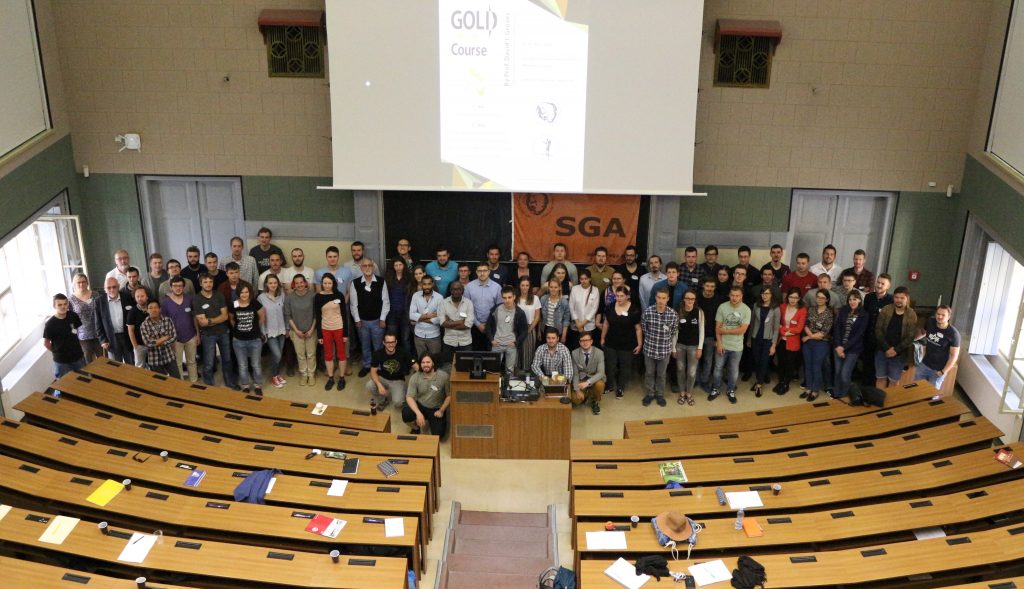
Republic, where 77 participants from 13 countries and 6 SGA Student
Chapters came to attend lectures by Prof. Groves (Fig. 2, 3).
David
I. Groves is an Emeritus Professor at the University of Western
Australia (UWA). He is considered to be a world leader in the
research of ore deposits, particularly orogenic gold and IOCG
deposits, and global metallogeny. On the UWA, he helped to establish
the Centre for Exploration Targeting. He has authored
and/or co-authored more than 500 publications, mainly in the fields
of Archean evolution, komatiite-associated Ni-Cu deposits, orogenic
gold deposits, the role of lithosphere in global metallogeny, and
prospection mapping. He was elected President of the SGA, SEG and the
Geological Society of Australia, and for his outstanding achievements
during his career, he received both the SGA Newmont Gold Medal and
the SEG Penrose Gold Medal.
Each
day of the short course was focused on different topics within 4
lectures:
1st
day – Orogenic gold deposits:
1st
lecture: Introduction to orogenic gold
2nd
lecture: The crustal continuum and genetic models for orogenic gold
3rd
lecture: Critical factors controlling the formation of orogenic gold
4th
lecture: Exploration targeting for orogenic gold
2nd
day – Gold deposits on craton margins:
5th
lecture: Introduction to intrusion-related gold deposits (IRGDs)
6th
lecture: Nature of hybrid magmas and genesis of IRGDs
7th
lecture: Carlin-type gold deposits of Nevada and China
8th
lecture: Iron-oxide copper-gold deposits: nature and genesis
SGA
Student Chapter Prague is grateful and would like to thank Prof.
Groves for leading this short course and we would also like to thank
all our sponsors who supported us during the organization of this
event. Especially the SGA Educational Fund for the financial support
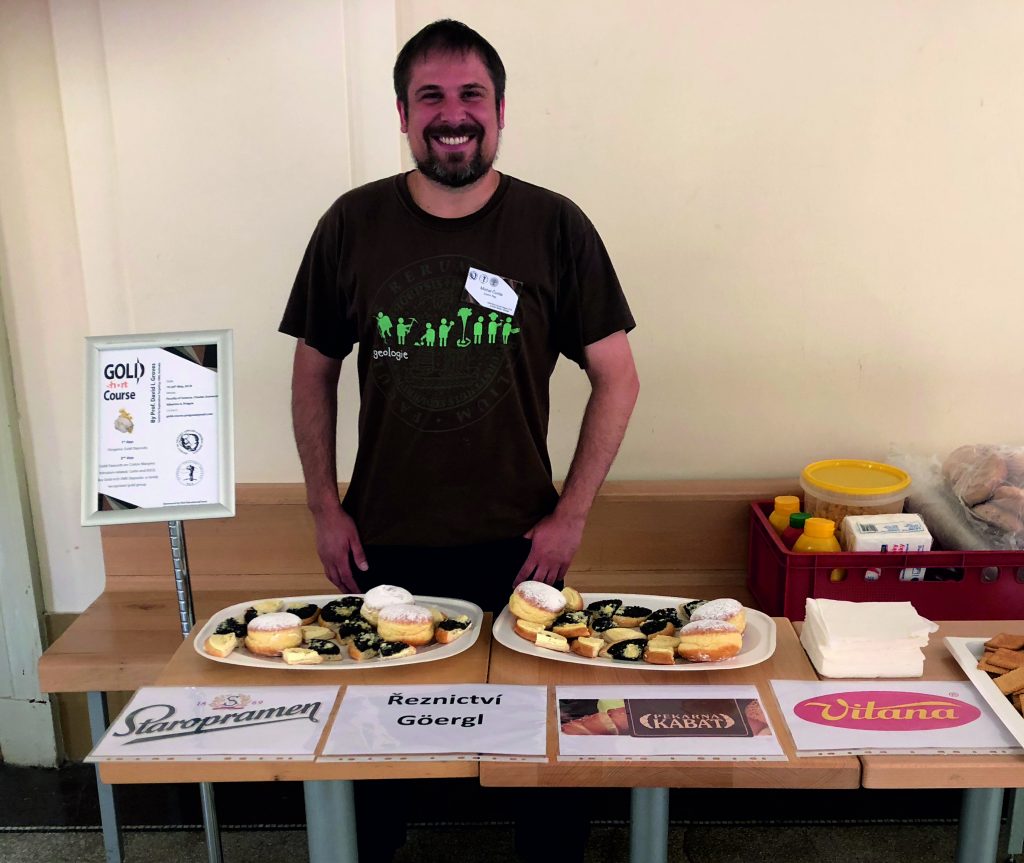
and the bakery Kabát, butchery Göergl, company Vitana and brewery
Staropramen for their excellent catering (Fig. 4).
Fig.
1: Ice-breaker visits of Chlupáč’s Museum of Earth History. Photo
by V. Santolík.
Fig.
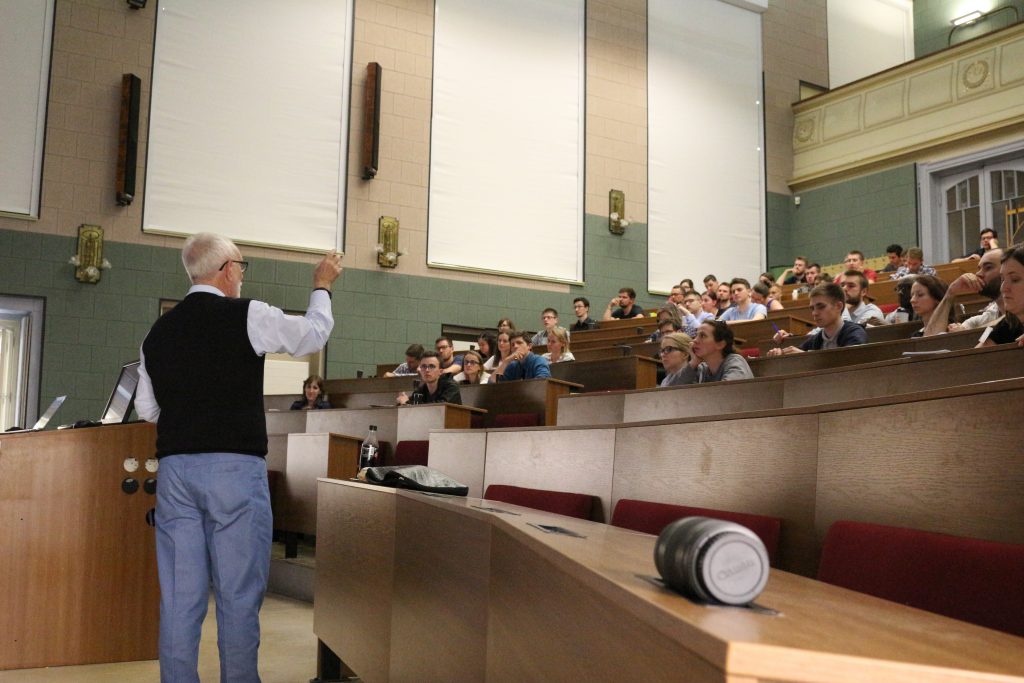
2: Ongoing lecture by Prof. Groves. Photo by V. Santolík.
Fig.
3: Group photo of all participants by V. Santolík.
Fig.
4: Food provider Michal Čurda with refreshments and sponsors logo.
Photo by M. Tuhý.
Field
trip
The
post-course field trip took place during 21–23rd
of May 2018 to various deposits in the Bohemian Massif. On this trip
participated 14 SGA members, besides the Prague Chapter’s members
also the Baltic, Black Forest and Moroccan members + SGA members
without chapter.
1st
day
We
visited the Jílové gold district, which is characterized by three
main types of gold-bearing ore bodies differing in morphology: ore
veins representing the main type of mineralization mined in the past,
gold-bearing stockworks representing the type of mineralization of
greatest economic importance and stockworks of irregular shapes
passing into impregnation zones which are developed at the eastern
margin of the albite granite body between the Šlojíř and Kocoury
vein zones, forming the Klobásy ore zone in the southern part of the
Jílové district (Pepř mine). Firstly, we have visited two
historical galeries, St. A. Paduán (Fig. 5) and St. Josef gallery,
where it was possible to see historical styles of mining. Afterwards
we moved to the more recent Pepř mine with Václav gallery which was
finished during the second half of 19th century when the underground
exploration of the southern part of the Jílové district occurred.
Since 2012, this mine is under control of the Montanika society, who
is removing the obstacles and taking care of the mine and to whom we
would like to thank for an excellent visit, especially to the leader
of this mine-tour Dr. Pavel Škácha (Fig. 6).
Fig.
5: Historical gallery St. A. Paduán. Photo by L. Kyrc.
Fig.
6: Introduction speech by Dr. Škácha in front of Václav gallery.
Photo by L. Kyrc.
2nd
day
We
moved to the Krušné hory Mts. on the NW part of the Czech Republic
and, in the morning, we visited the historical town Jáchymov, which
is an old well-known mining district operating since 1511. In the
beginning, silver was mined in secondary cementation zones and in
1519, the first Šlik’s Thaler was minted. This name was then
transformed into the currency dollar. During the 16th
century, 350 tons of silver were obtained. In the 19th
century, this was the deepest mine in the world (665 m). After the
discovery of uranium,local mines produced high quantities of this
element and it was used mainly for glass and ceramics coloring. After
the discovery of radium and upcoming radium rush, the first radium
spa was established (1906) which is still in operation. Because of
this, Svornost mine, is still operating and pumping the radioactive
waters used for healing treatments (Fig. 7). Jáchymov ore district
is a typical example of the five-element formation Ag-Co-Ni-Bi-As and
U-formation formed as a medium temperate vein hydrothermal deposit in
the Czech part of the Krušné hory Mts. (Erzgebirge). Up to 430
minerals, both primary and supergene, have been discovered and
described in Jáchymov up to now (latest figure counted by J. Plášil
in February 2011). After the mine tour, we also visited a local
museum with a beautiful mineralogical collection from this area and
with historical insight to the Jáchymov town.
The
next stop was the historical mine Mauritius (Fig. 9) located near the
town Horní Blatná, which has been an important mining center for
the past several centuries, mainly for tin, and secondly for silver,
iron, cobalt and later manganese ores. The mine was closed in 1944
and today provides well preserved historical galleries mined from the
end of 16th century. The occurrences of tin ores are bound to the
biotitic granites of the Blatná massif that build the wider
neighborhood of the Blaten Hill. The granites are greisenized and
enriched with mica, tourmaline, quartz, chlorite and especially
cassiterite.
Close
to the borders with Germany, we visited a skarn deposit called Zlatý
Kopec, which is a lens-shaped body of diopside- and
diopside-actinolite skarn in a chlorite-sericite phyllites complex.
Ore minerals are cassiterite, sphalerite, chalcopyrite, and
magnetite, which we had the opportunity to collect on the heaps near
the gallery Johannes.
Fig.
7: Taking bath in warm radioactive spring Běhounek directly in
Svornost mine more than 500 m below the surface level. Photo by L.
Kyrc.
Fig.
8: Group photo in front of Svornost mine. Photo by L. Kyrc.
Fig.
9: Introduction talk in Mauritius mine. Photo by L. Kyrc.
3rd
day
On
the last day, we firstly visited an open-pit mine and processing of
gem-quality pyropes, which are famous under the name “Czech
garnet”. Czech garnet separating plant and the open-pit mine (Fig.
10), called Panské jámy, are situated close to the Podsedice
village in the České Středohoří area (Central Bohemian Uplands –
a neovolcanic field on the north of Czech Republic). There are
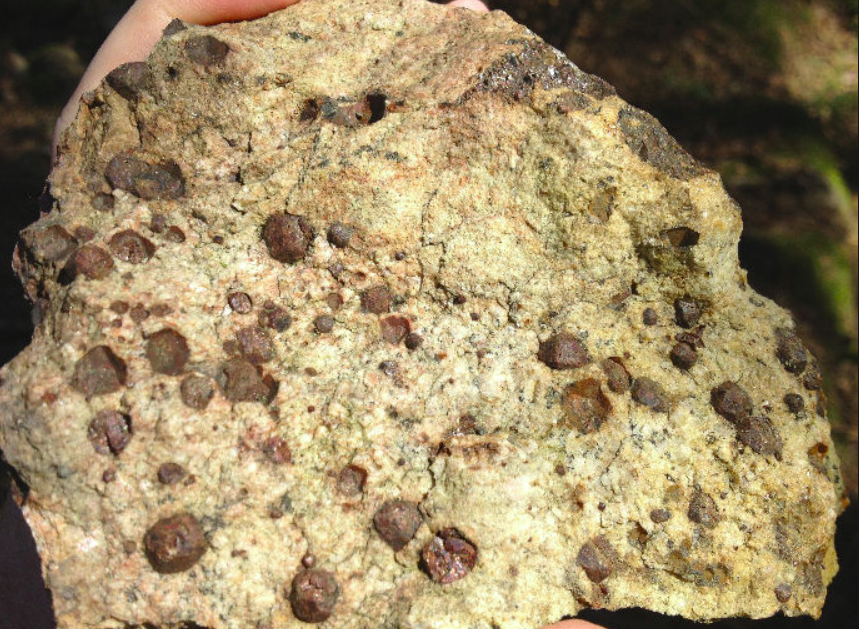
approved reserves with a garnet content of about 40 g/m3.
Garnets are mined easily by excavators from alluvial sediments, but
originally, garnets come from near volcanic spots (diatremes), whose
breccia filler contains blocks of serpentinized peridotite rich in
those garnets. After separating garnets with the proper size and
quality, they are sent for cutting and are used in the famous
jewellery made by the company Granát Turnov.
After
the garnets, we moved to the northern part of Krušné hory Mts.,
where we visited Krupka town surroundings in one of the youngest
mining districts in this area named Knöttel (Bohosudov) situated on
the east of Krupka area. The underground mining in this region,
started in the 18th
century. The deposit was formed in gneisses and was mainly exploited
for tin and molybdenum mineralization. We started our tour close to
the Barbora gallery, one of the molybdenum mine galleries exploited
during World War 2. Then, we stopped near Siebenschläfer, a modern
gallery with tin, copper and bismuth mineralization mined mainly for
cassiterite. Next stop was on an old heap with high contents of
native bismuth accompanied by chalcopyrite (Fig. 11). Another nearby
stop was the Zwickenpinge, an open-pit with small shafts and heap
with secondary copper mineralization and the first place of surface
mining of tin and copper ores originated in 13th
century. We also visited an open-pit above Prokop gallery, molybdenum
mine with quartz body and greisen vein with occurrences of
molybdenite, fluorite, topaz etc. The last stop was at the place
where the quartz vein called Lukáš surfaces and where it was
possible to find samples of green apatite crystals up to 1 cm,
tin-rich mica zinnwaldite and some fluorite crystals.
Finally, we would like to thank
all the leaders of the separate trips, especially to Dr. Pavel Škácha
from the Pepř mine in Jílové district and Dr. Jakub Plášil and
Dr. Viktor Goliáš for leading the trips to Svornost mine in
Jáchymov. Special thanks to the Svornost mine and company Granát
Turnov for allowing us to explore their mines and also to all the
sponsors mentioned above.
Fig.
10: Collecting of small gem-quality pyropes in the open-pit mine near
Podsedice village. System of cascades for cleaning processing waters.
Photo by J. Mysliveček.
Fig.
11: Collecting samples on the heap rich on native bismuth. Photo by
J. Mysliveček.
The
2017 autumn field trip organized by SGA Student Chapter Prague took
its participants to some world-famous locations, such
as Komorní Hůrka,
Kössain, Stříbro and Kašperské Hory. Here, we saw the heritage
stones of the southwestern
region of the Bohemian Massif.
Day
1
We
started the day with a visit to the
Tis u Blatna quarry (Fig. 1), which is currently mined by GRANIO
s.r.o. The special type of granite at this site is locally called
“Czech Labradorite” due to its bluish hues that are caused by
quartz. Afterwards we visited localities near Horní
Slavkov with
Sn-W-Mo-Cu-rich
quartz
veins. First
locality Huberův peň used to be
mined for Sn and W. The erlan mineralization allows for fairly large
crystals of cassiterite to be found alongside wolframite, green and
violet apatite, chalcopyrite, topaz, molybdenite and violet fluorite.
The second locality in this area, Vysoký
kámen, is a
greisen-type deposit, where green spheroid chalcosiderite-turquoise
chain minerals were formed during decomposition. Finally, we visited
the Štenská
u Teplé
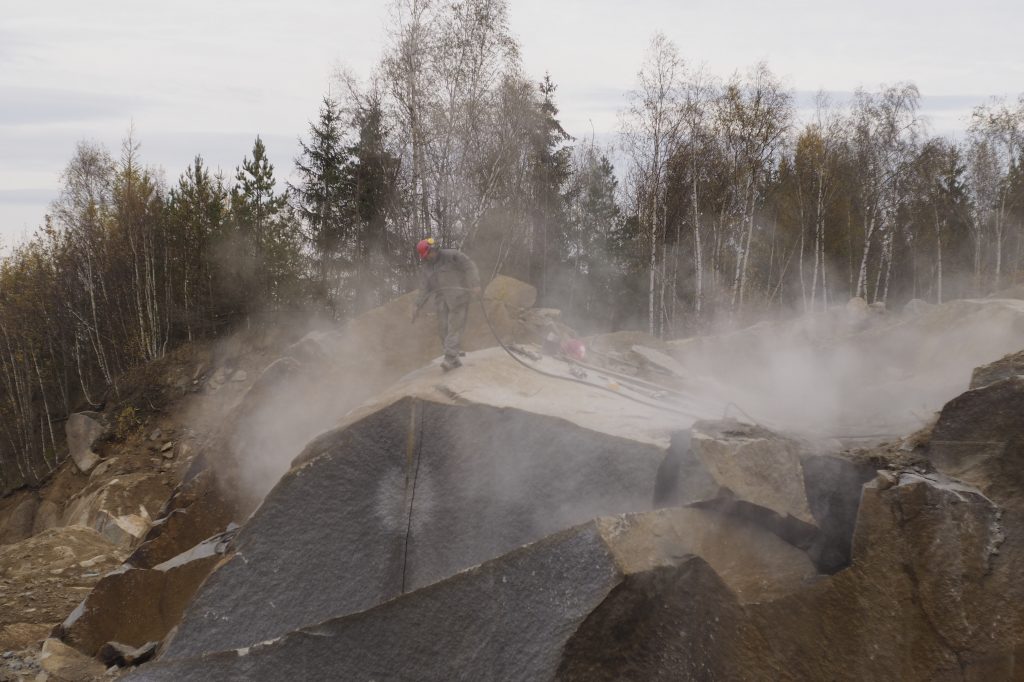
quarry, the only locality in Czech Republic where trachyte is mined.
Fig.
1: Tis u Blatna quarry. Photo by M. Vopat.
Day
2
In
the morning, we arrived to Komorní Hůrka (Fig. 2), one of the
youngest volcanoes in the Czech Republic, with its age being
estimated between 200 000 and 1 million years. Kormorní Hůrka is a
stratovolcano, with interchanging eruptions of basaltic lava flows
and pyroclastic deposition, both tuff and volcanic bombs can be found
at this locality. Afterwards we moved on to Marktredwitz (Fig. 3)
where the highway cuts through an assortment of redwitz, from
granodioritic to gabbroitic. The next point of interest was Blue
Granite in Pfalzbrunnen quarry outside of Kössain. The granite here
is being mined for 100 years and is prized for its porphyric
structure and fine quality.
Fig.
2: Goethe’s
adit for research purposes at Komorní
Hůrka. Photo by M. Vopat.
Fig.
3: Feldspars at Marktredwitz. Photo by M. Vopat.
Day
3
We
visited Stříbro (Fig. 4), a famous Czech locality with Pb-Zn
mineralization and a great history of mining. The first known
document referring to the silver mines is from the 12th
century. Silver was mined in this area throughout the Medieval ages,
then around the 16th
century, lead started being mainly mined. The veins contain multiple
quartz generations along with galenite, sphalerite, pyrite with
marcasite and occasionally chalcopyrite. Then, we moved to a uranium
deposit Damětice. It used to be a small mining area. The upper part
of the deposit is oxidized and its possible to find uranium micas
such as uranocircite, autunite and torbernite while the lower deposit
contain primary mineral uraninite. Later, we visited an old marble
quarry in Nezdice na Šumavě.
The marble in the lower part of the quarry has a beautiful sky-blue
color and contains fine needles of wollastonite. We ended our day in
Kašperské Hory,
an area full of historical gold mines from the 10th
and 14th
century. The latest geological survey still shows deposits of gold
with 5.6 ppm Au.
Fig.
4: Stříbro, heap from Pb-Zn mine. Photo by J. Mysliveček.
Day
4
We
arrived early to Malenice (Fig.5), where we observed migmatite and
paragneiss boulders containing almandines. Tetragonal trioctahedral
and rhombic dodecahedral crystals can be found here or the
combination of both. Than we explored the locality Sepekov and we
found a group of hercynite spinel-rich rocks and varying content of
phlogopite located on the contact of a gneiss-migmatite and
tourmaline granite rock bodies. We ended our field trip in Krásná
Hora nad Vltavou
at an extensive mineralization of gold and antimonic veins stretching
throughout the area. We searched around an old rock pile from the
mine shaft Emilka consisting of red stained granite with antimony
crystals and grains.
Fig.
5: Malenice, paragneiss containing almandines. Photo by D. Brém.